
Dominican Stuffed Cabbage Rolls (Niños Envueltos) are one of those dishes that nobody talks about until somebody’s grandmother makes them, and then everyone remembers.
The name translates roughly to “wrapped children,” which is a very Dominican way of describing a cabbage leaf rolled around a seasoned meat filling. They are simmered in tomato sauce until the repollo softens and the filling absorbs everything around it.
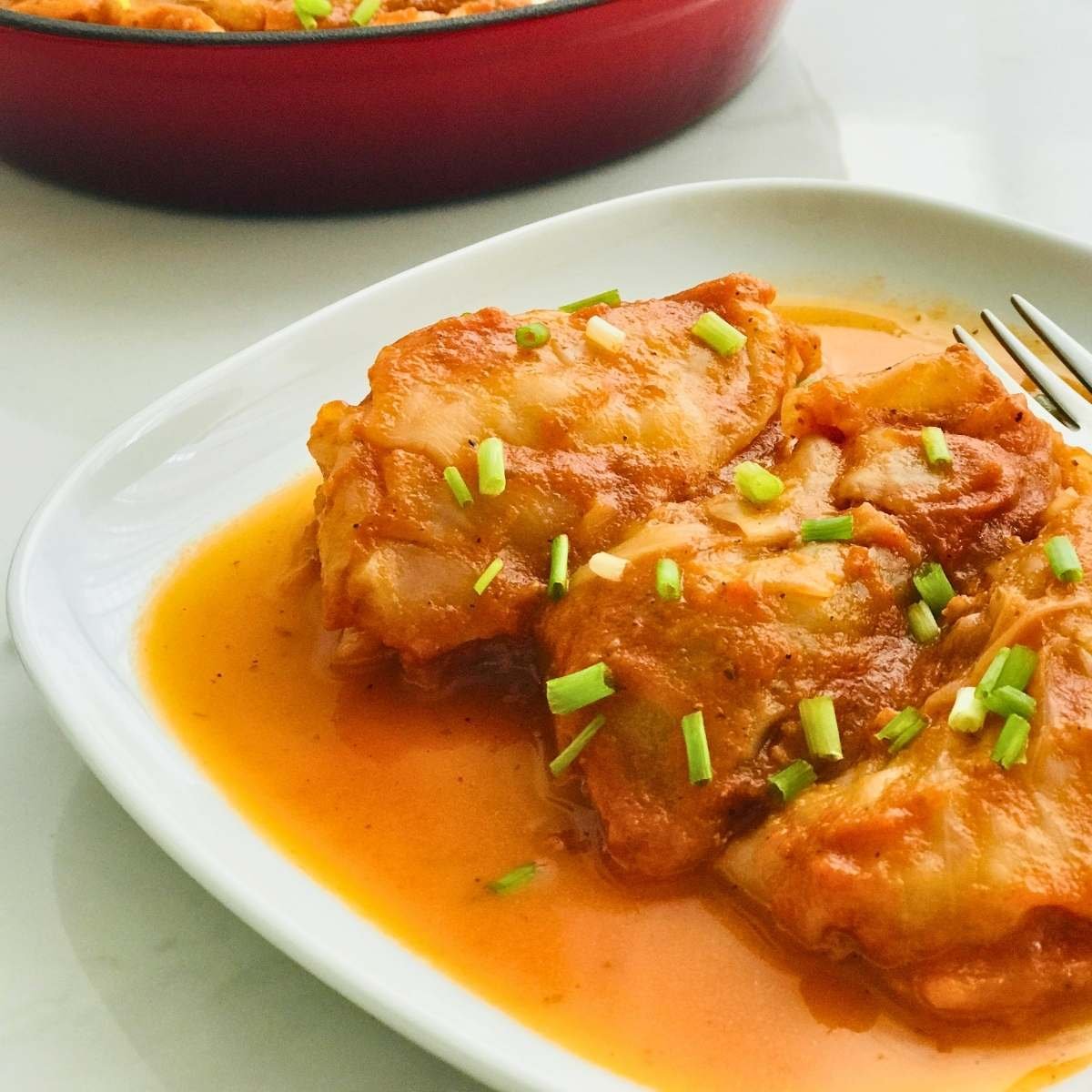
My mother made these when she wanted to cook something that felt special without spending all afternoon in the kitchen. A head of cabbage, ground beef, some rice, sofrito, and a simple tomato sauce. She boiled the leaves until pliable, filled them, rolled them tight, and let them sit in the sauce for 30 minutes.
These Dominican niños envueltos do the same thing with two changes: cauliflower rice instead of white rice in the filling, and lean ground beef with a higher meat-to-grain ratio. The sauce is homemade with fresh tomatoes and sofrito. The result is 43g of protein per serving, significantly lower carbs, and a plate that connects directly to the cooking your family grew up with.
Gaila | AFPA Certified Holistic Nutritionist | Dominican Cook
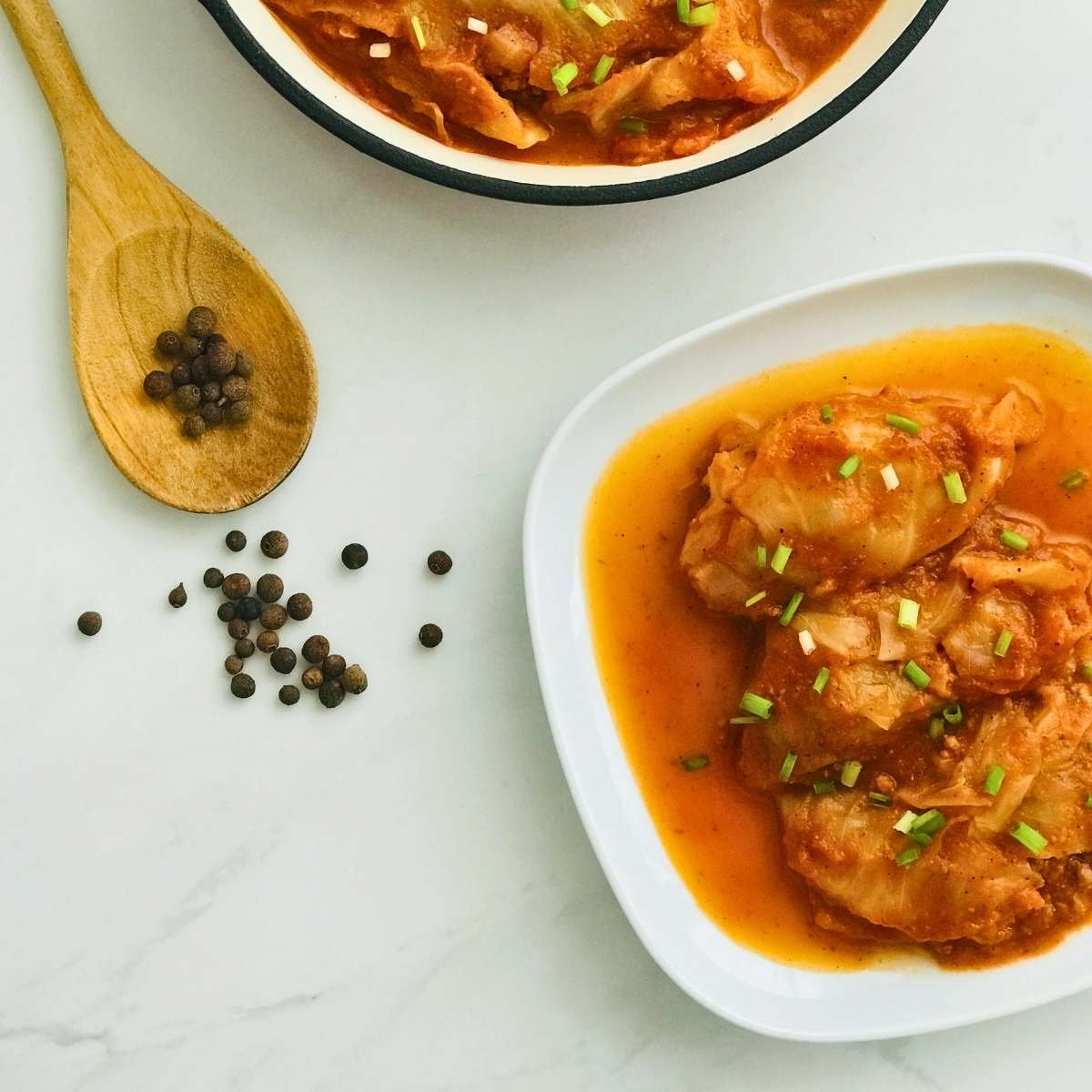
Table of Contents
Why Cauliflower Rice Changes the Protein Math in Niños Envueltos
Traditional niños envueltos use white rice as a filler in the meat mixture. That makes sense economically and texturally, but it also lowers the protein density per serving and raises the carbohydrate load.
Swapping white rice for cauliflower rice in the filling does two things. First, it drops the carbs significantly, with one cup of cauliflower rice containing 5g of carbs versus 45g in white rice.
Second, it allows you to increase the proportion of lean ground beef, which is where the protein lives. A 6oz portion of 90/10 ground beef delivers 38g of protein with 10g of fat. Paired with the egg binder and the cabbage itself (which has 2g of protein per cup), one serving of these Dominican stuffed cabbage rolls reaches 43g of protein.
The Cleveland Clinic recommends 25-30g of protein per meal for optimal muscle protein synthesis. These niños envueltos hit that target.
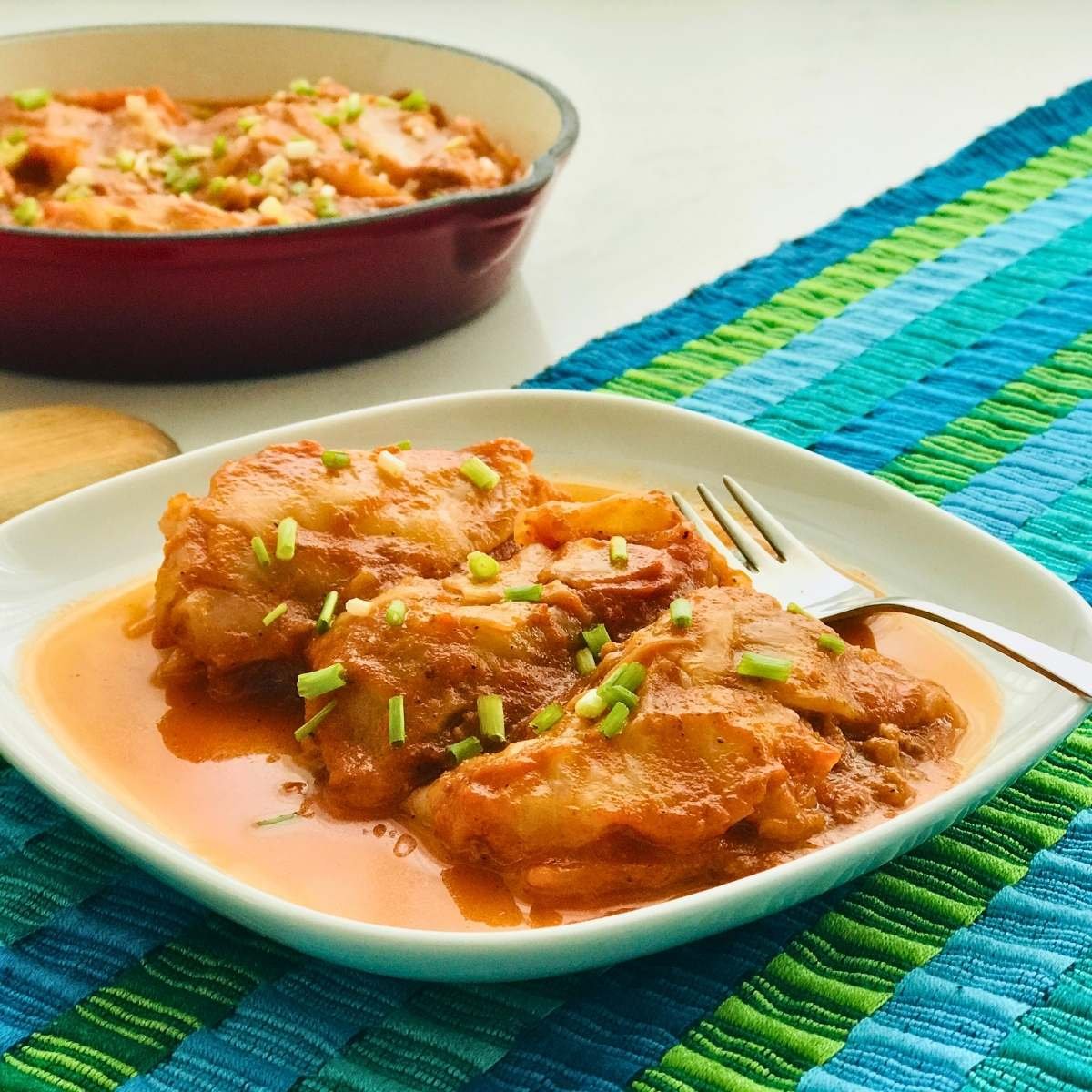
Dominican Stuffed Cabbage Rolls (Niños Envueltos) – Heritage Recipe, 43g Protein
Ingredients
For the rolls:
- 1 large head green cabbage
- 1.5 lb lean ground beef 90/10
- 2 cups cauliflower rice fresh or frozen, squeezed dry
- 1 egg beaten
- 3 garlic cloves minced
- 1/4 cup white onion diced fine
- 2 tbsp homemade sofrito
- 1 tsp oregano
- Salt and black pepper to taste
For the sauce:
- 4 fresh tomatoes diced, or 1 can (14oz) diced tomatoes no salt added
- 1/2 onion diced
- 3 garlic cloves
- 2 tbsp sofrito
- 1 tbsp olive oil
- 1 tsp oregano
- Salt pepper, and a drizzle of extra virgin olive oil to finish
Instructions
- Prepare the cabbage leaves. Bring a large pot of water to boil. Core the cabbage and carefully separate 12 large outer leaves. Boil the leaves in batches, 3-4 minutes each, until pliable and translucent. Transfer to a plate and pat dry.
- Make the filling. In a bowl, combine ground beef, cauliflower rice (squeezed of any excess moisture), beaten egg, garlic, onion, sofrito, oregano, salt and pepper. Mix gently until just combined. Do not overwork.
- Build the sauce. In a wide deep skillet or Dutch oven, heat olive oil over medium heat. Add onion and garlic, cook 3 minutes. Add sofrito, cook 1 minute. Add tomatoes, oregano, salt and pepper. Simmer 8 minutes until slightly thickened.
- Roll and arrange. Place 3-4 tablespoons of filling in the center of each cabbage leaf. Fold in the sides, then roll tightly from the bottom up. Place seam-side down in the tomato sauce. Pack them snugly so they hold shape.
- Simmer. Cover and cook over medium-low heat 30-35 minutes, basting the tops with sauce halfway through. The rolls are done when the meat is fully cooked through and the cabbage is very tender.
- Finish. Remove from heat. Drizzle with a little extra virgin olive oil. Let rest 5 minutes before serving.
Nutrition
Smart Swaps for Dominican Stuffed Cabbage Rolls (Niños Envueltos)
- Leaner: Use 96/4 ground beef or substitute half with ground turkey 93/7. The filling will be slightly less juicy but still holds together.
- No cauliflower rice: Use cooked lentils instead of cauliflower rice. Lentils add 9g of plant protein and hold moisture well, giving the filling a hearty texture.
- Bariatric: These rolls are naturally soft after simmering. For the soft food phase, remove the cabbage leaf and serve only the filling in the tomato sauce, mashed slightly with a fork.
- Vegetarian version: Replace the beef with a combination of cooked lentils, diced mushrooms, and cooked quinoa. Season heavily with sofrito and smoked paprika for depth.
Nutritionist Note
As an AFPA Certified Holistic Nutritionist, the combination of lean beef with vegetables inside a cabbage leaf is one of the most nutritionally balanced forms this dish can take.
Cabbage is a cruciferous vegetable, which means it provides sulforaphane, a compound the National Cancer Institutehas studied for its potential anti-inflammatory and antioxidant properties. For women over 45 managing inflammation, adding cruciferous vegetables like cabbage, kale, and broccoli regularly is a simple, effective habit.
FAQ
- What is the difference between Dominican Stuffed Cabbage Rolls (Niños Envueltos) and Polish stuffed cabbage? The core technique is the same – a meat filling wrapped in softened cabbage leaves and cooked in tomato sauce. The Dominican version uses sofrito as the flavor base, which adds garlic, onion, cilantro, and cubanela pepper, and typically does not include paprika or sweet spices the way Central European versions do. The result is a distinctly Caribbean flavor profile.
- Can I use savoy cabbage instead of green cabbage? Yes. Savoy cabbage has more tender, crinkled leaves that are easier to roll. The flavor is milder and slightly sweeter. Either works for these Dominican stuffed cabbage rolls.
- Can I bake these instead of simmering on the stovetop? Yes. After rolling and placing in the sauce, cover with foil and bake at 350F (175C) for 50-60 minutes until cooked through. Add a splash of water to the sauce if it reduces too much.
SMART SWAPS – BARIATRIC PHASES
Dominican Stuffed Cabbage Rolls (Niños Envueltos) – 43g Protein
PUREED PHASE
The cabbage leaf is not suitable for this phase – it is too fibrous, and the texture does not break down safely. Do not attempt the full roll.
Make the filling only. Cook the ground beef mixture completely in the tomato sofrito sauce until very soft and fully broken down. Blend or process until smooth. Thin with a tablespoon of warm low-sodium bone broth if needed for consistency.
Serving size: 3-4 tablespoons. Protein per serving at this portion: approximately 10-12g. Eat slowly.
Cauliflower rice can cause gas in this phase. If you are sensitive, substitute with 2 tablespoons of well-cooked mashed butternut squash (auyama) in the filling instead.
SOFT FOOD PHASE
The filling simmered in tomato sauce is naturally soft after 30-35 minutes of cooking. The meat breaks down well and tolerates this phase.
The cabbage leaf is still too fibrous for early soft phase. Remove it. Serve only the filling in the sauce, mashed lightly with a fork.
By week 6-8 of soft phase, if your surgeon has cleared textured foods, you may try half a roll with the leaf cut into very small pieces and mixed into the filling. Chew thoroughly, 20-25 chews per bite.
Serving size: one quarter to one half of the filling portion (without the cabbage leaf). Do not rush to a full serving.
GENERAL DIET
The full recipe as written is appropriate here. One complete roll with the cabbage leaf and filling is a reasonable serving.
Use 96/4 ground beef or substitute half with ground turkey 93/7 to reduce fat per serving. Lower fat in the meat reduces the risk of fat intolerance symptoms, especially if you are still in the early general diet stage.
If the cabbage causes bloating, this is normal with cruciferous vegetables after bariatric surgery. Start with half a roll. The longer the rolls simmer, the softer and more digestible the cabbage becomes. 35 minutes minimum.
Serving size: 1 roll. Full macros apply: 43g protein, 488 calories.
MAINTENANCE
Full recipe as written. One to two rolls, depending on your daily protein targets and total calorie tolerance.
If you are working toward 80-100g protein daily, two rolls in one meal plus a cup of low-sodium bone broth on the side brings you to approximately 50g protein for that sitting.
DUMPING SYNDROME PROTOCOL
The tomato sauce in this recipe contains natural sugars from fresh tomatoes (13g sugar per serving, from whole food sources). For most bariatric patients, this does not trigger dumping. However, if you are reactive to tomatoes, reduce the sauce quantity and increase bone broth as the liquid base. Do not add any sweetener to the sauce.
Eat the roll before any liquid. Wait 30 minutes after eating before drinking water.
FAT INTOLERANCE NOTE
90/10 ground beef contains 24g of fat per full serving. If you are in early general diet or still experiencing fat intolerance, use 96/4 ground beef or a 50/50 blend with ground turkey 93/7. This brings fat down to approximately 12-14g per serving without changing the structure of the roll.
Do not use ground pork or longaniza as the primary protein in this phase.
IRON + B12 NOTE
Lean ground beef is one of the best sources of heme iron available. One serving of this recipe provides 6mg of iron, approximately 33% of the daily recommended intake for women.
The tomato sauce (vitamin C from fresh tomatoes) actively enhances iron absorption in this meal. This is a genuinely useful combination for bariatric patients managing iron deficiency, which is common after sleeve gastrectomy and bypass.
Take your B12 supplement separately from this meal. B12 does not interfere with iron absorption, but bariatric patients need consistent supplementation regardless of dietary intake.
SODIUM MANAGEMENT
This recipe, as written, contains 316mg of sodium per serving, which is low. If you are managing blood pressure or fluid retention, keep sofrito homemade (store-bought sofrito can add 200-300mg of sodium per tablespoon) and use no-salt-added canned tomatoes if substituting fresh.
Do not add salt during the soft food or early general diet phase. Season with oregano, garlic, and sofrito only.
CRUCIFEROUS / BLOATING NOTE
Cabbage is a cruciferous vegetable. After bariatric surgery, many patients experience increased gas and bloating from cruciferous vegetables, especially in the first 12 months. This is a motility issue, not an allergy.
To reduce this: simmer the rolls for the full 35 minutes minimum. Longer cooking breaks down the raffinose (the compound responsible for gas) in the cabbage. If you are still sensitive, start with the filling only and reintroduce the cabbage leaf once your digestive tolerance improves.
Cauliflower rice in the filling can also contribute to gas. If this is a problem, substitute with well-cooked lentils, which digest more easily for most bariatric patients, and add additional plant protein.
Try these next:
- 5 High-Protein Dominican Bowls
- Low-Carb Dominican Pastelón – Easy Cauliflower Casserole with 29g Protein
- Pollo Asado Dominicano with Avocado Salsa
- Delicious Low-carb chicken nuggets
If this hits the spot, drop a comment below or tag me @strengthandsazon on Instagram. I want to see your version. And if you want recipes like this in your inbox each week, join the newsletter.
Con Fuerza y Sazón,
Gaila
AFPA Certified Nutritionist, Dominican Cook, Bariatric Patient
Did you make this recipe? I want to see your plate! Tag @strengthandsazon and use #StrengthAndSazon so I can share your creation with our whole community 🇩🇴
If you love this kind of cooking, the 5 High-Protein Dominican Bowls guide takes the same approach to five classic dishes.
Let’s stay connected:
These were wonderful easy
Thank you so much! I am glad you like this recipe!