
This Dominican Baked Coconut Dessert (Coco Horneado) is one of the oldest desserts in Caribbean cooking and one of the most underrepresented on modern food blogs.
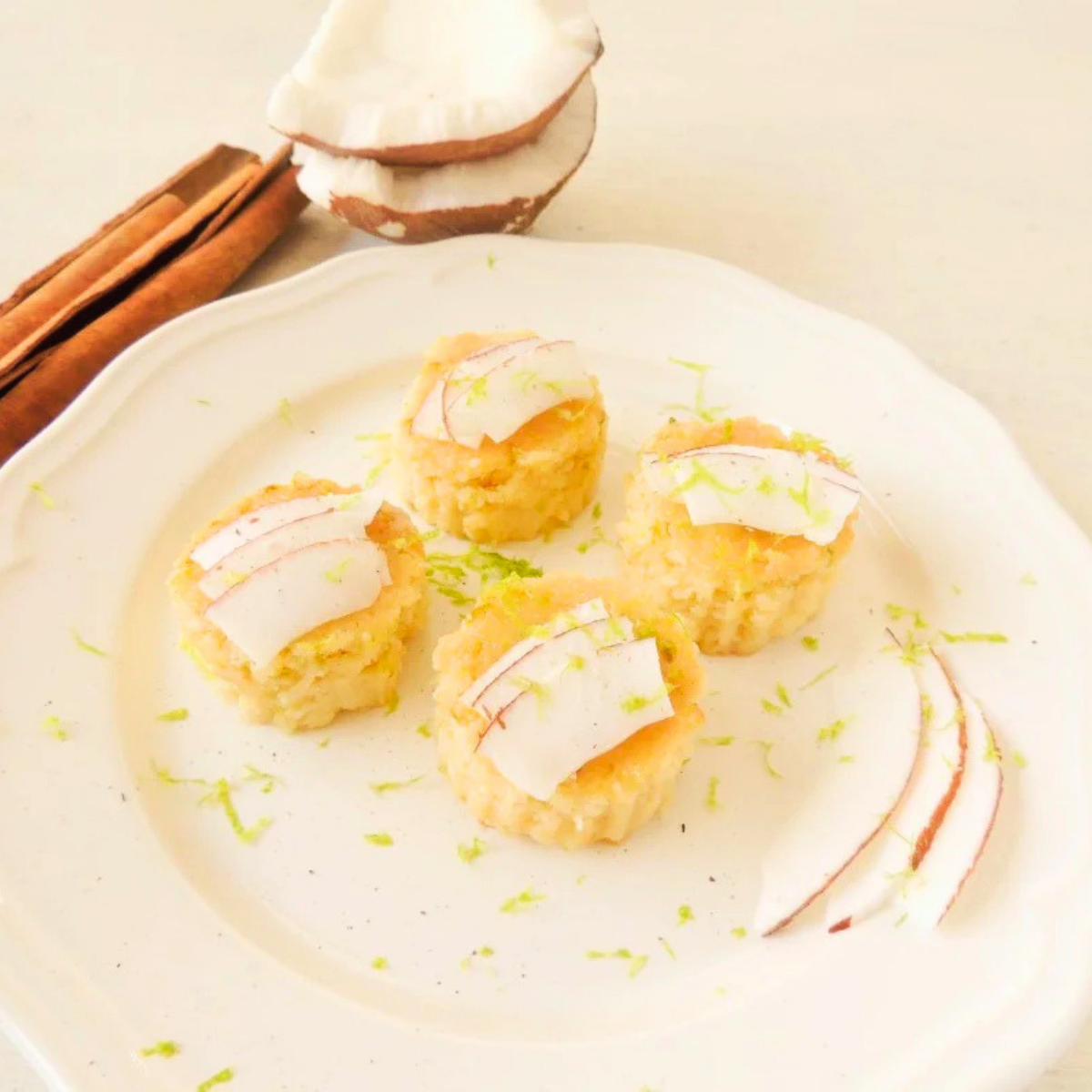
Every Dominican who grew up with a grandmother who baked knows this dessert. It is dense, golden, intensely coconutty, with that slightly crisp edge that only baked coconut produces. It smells like the inside of a Caribbean kitchen on a Sunday afternoon. It is not subtle. It is not refined. It is exactly what it is supposed to be.
This version uses allulose instead of refined sugar – the same caramelization, the same golden crust, the same deep sweetness, without the blood sugar spike.
Greek yogurt and eggs replace evaporated milk as the protein base. Lime zest from four green limes gets rubbed directly into the coconut with the allulose, releasing the essential citrus oils into every grain of the mixture.
The result is 8 grams of protein per serving, 3 grams of sugar, and a dessert that tastes exactly like the one your grandmother made. The Dominican kitchen has always known how to do this. We just gave it better ingredients.
Gaila | AFPA Certified Holistic Nutritionist | Dominican Cook
Table of Contents
Protein Score
Base protein: 8g per serving | Tier: Balanced
The Greek yogurt and eggs provide the majority of the protein at approximately 6g per serving combined. The almond flour contributes 2g.
The coconut itself adds minimal protein but significant fiber and healthy fat from the medium-chain triglycerides in the coconut milk.
At 448 calories and 3g of sugar, this is a generous, satisfying dessert portion that fits comfortably into a high-protein day.
Protein Boost Options
- Replace Greek yogurt with blended full-fat cottage cheese (same volume) – same creamy texture, increases protein to 11g per serving
- Add 2 scoops of unflavored collagen peptides to the dry coconut mixture – adds 9g protein per batch distributed across servings, completely invisible
- Serve with a spoonful of Greek yogurt on top when plating – adds 6g protein and a cool, tangy contrast to the warm baked coconut
- Replace ¼ cup of almond flour with ¼ cup of hemp seeds – adds plant protein and omega-3 fatty acids with a subtle nutty note
Why Dominican Coco Rallado Horneado Works After 45
Coconut is one of the most nutritionally complex ingredients in Dominican cooking. The USDA FoodData Central confirms that full-fat coconut milk provides medium-chain triglycerides – fatty acids the Mayo Clinic notes are metabolized more directly for energy than long-chain saturated fats, and which may support cognitive function and sustained energy through the afternoon.
The unsweetened shredded coconut in this recipe provides 7g of fiber per cup – significantly more than most baked desserts.
Why You’ll Love This Dominican Baked Coconut Dessert (Coco Horneado) Recipe
- The allulose caramelizes the coconut edges to a deep golden brown that looks and tastes exactly like the sugar-sweetened version – nobody at the table will know the difference
- Rubbing the lime zest into the coconut mixture releases citrus oils that infuse every bite of the baked dessert – the brightness cuts through the richness of the coconut milk and butter in a way that dried zest or juice cannot replicate
- Greek yogurt replaces evaporated milk as the creamy binder – same function, triple the protein, and a subtle tang that makes the coconut flavor more complex
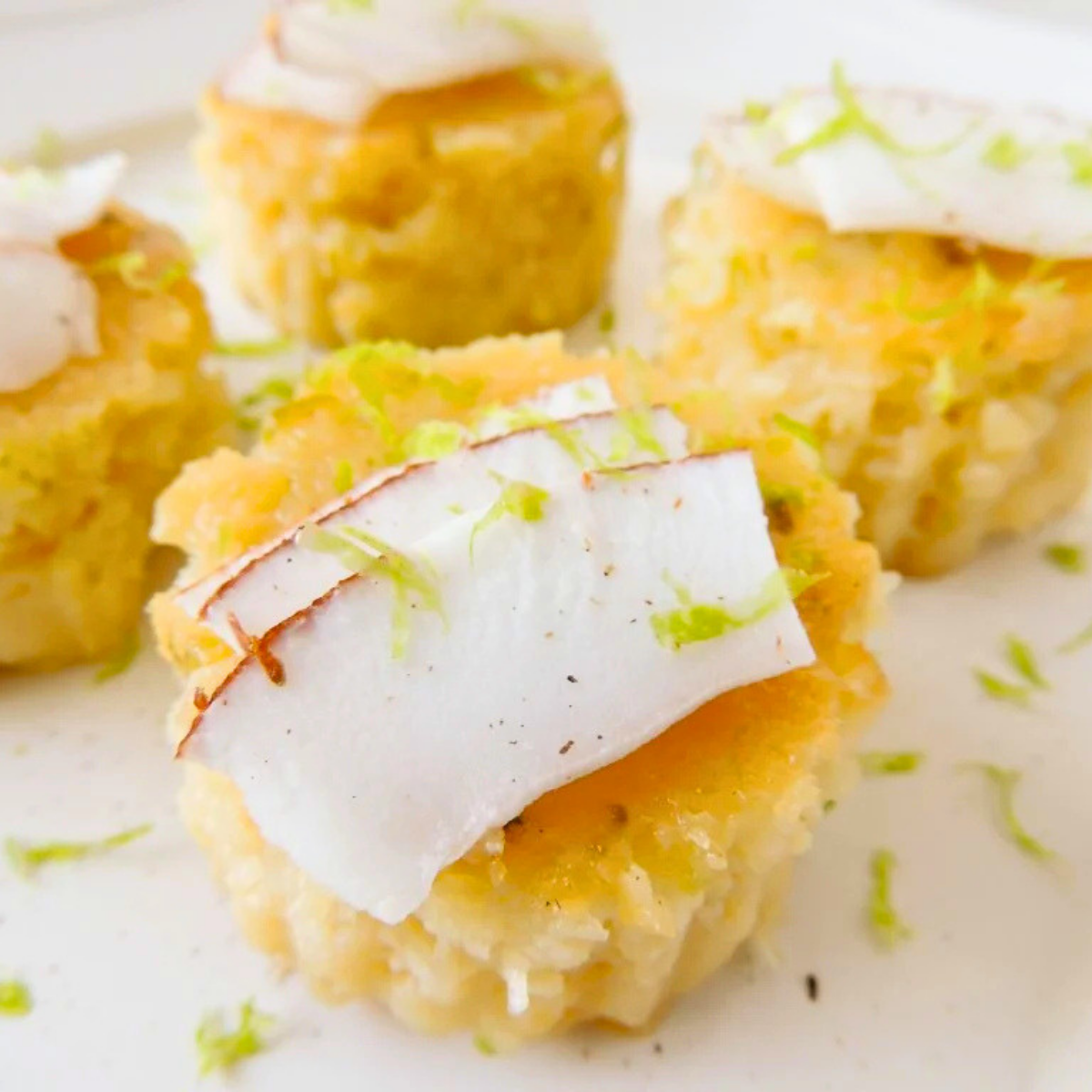
- The batter is rustic and textured by design – this is not a cake that should be smooth. The rough, dense, uneven surface is exactly what produces the golden crust
- Works in a rectangular baking mold, a round cake pan, or individual ramekins – the baking time adjusts but the result is equally good
- Cool completely before slicing – the allulose needs to set as it cools, exactly like regular sugar. Cutting warm produces crumbles, not slices
Dominican Baked Coconut Dessert (Coco Horneado)
Ingredients
- 3 cups unsweetened shredded coconut freshly grated is best
- 1 cup allulose
- 2 cups full-fat coconut milk
- ½ cup plain Greek yogurt or blended cottage cheese
- ½ cup almond flour or oat flour
- 2 whole eggs lightly beaten
- Zest of 4 green limes
- 3 tbsp melted grass-fed butter
- ½ tsp ground Dominican cinnamon
- Pinch of salt
Instructions
- Preheat oven to 180C (350F). Grease your baking mold lightly with coconut oil.
- Infuse the zest: combine shredded coconut with allulose and lime zest in a large bowl. Rub the zest into the coconut with your fingers for 1-2 minutes to release the essential citrus oils. This step is not optional.
- Mix wet ingredients: add eggs, Greek yogurt, coconut milk, and melted butter to the coconut mixture. Whisk until well combined.
- Fold in dry ingredients: add almond flour, cinnamon, and salt. Fold until evenly distributed. The batter should be thick, rustic, and highly textured.
- Bake: pour into prepared mold. Bake 35-45 minutes until edges are deep golden brown and a toothpick inserted in the center comes out clean.
- Cool completely before slicing – at least 30 minutes. The allulose sets as it cools. Cutting warm will crumble the dessert. Finish with a fresh squeeze of lime juice and a dusting of lime zest just before serving.
Nutrition
Nutritionist Note
As an AFPA Certified Holistic Nutritionist, coco rallado horneado is the dessert I talk about when I want to explain that Dominican sweets are not the problem. The refined sugar was.
This version removes the only ingredient that was working against you and keeps everything else exactly as your grandmother made it. The coconut, the lime, the cinnamon, the butter, the rich batter. All of it intact.
The fat content at 44g per serving is high and comes primarily from the coconut milk and shredded coconut. These are predominantly medium-chain saturated fats that the Mayo Clinic notes are metabolized differently than long-chain saturated fats from animal sources. In the context of a high-protein, fiber-rich overall diet, this dessert is appropriate as an occasional treat – not a daily option.
For bariatric patients in the general diet and maintenance phases, one small slice (approximately half the standard portion) is appropriate. The dense texture requires thorough chewing.
The American Society for Metabolic and Bariatric Surgery recommends eating slowly and stopping before fullness with calorie-dense foods. This applies here.
The lime zest is the functional ingredient that most people overlook. Limonene from the citrus peel is an antioxidant compound. The four limes in this recipe are not decoration. They are doing real work.
Smart Swaps
Lower fat: replace full-fat coconut milk with light coconut milk plus ¼ cup of Greek yogurt to compensate for the lost creaminess. Drops fat from 44g to approximately 28g per serving while keeping protein above 8g.
Higher protein: replace Greek yogurt with blended full-fat cottage cheese. Brings protein from 8g to 11g per serving with no change in texture or flavor.
Dairy-free: replace Greek yogurt with full-fat coconut yogurt. Replace butter with additional coconut oil. Fully dairy-free and still completely Dominican.
Freshly grated coconut: if you have access to a fresh coconut, grate it yourself. The moisture content and flavor of fresh coconut transform this recipe. Use the same volume as the dried shredded version.
Individual ramekins: divide the batter into 8 greased ramekins and bake at the same temperature for 25-30 minutes. Individual portions look beautiful and make serving effortless.
Frequently Asked Questions
What is coco rallado horneado dominicano? Coco rallado horneado is the Dominican baked coconut dessert – shredded coconut mixed with a creamy batter of eggs, coconut milk, and sweetener, baked until the edges are deep golden and the interior is dense and fragrant.
It is one of the oldest Caribbean desserts, made throughout the Dominican Republic and across the Caribbean with regional variations in sweetener, citrus, and spice. This version uses allulose instead of sugar and Greek yogurt for added protein.
Does allulose caramelize like sugar in baking? Yes. Allulose caramelizes at a temperature close to regular sugar, producing the same deep golden color at the edges of baked coconut desserts.
The Maillard reaction – the browning that develops flavor and color in baked goods – occurs with allulose in the same way it does with sugar. The only difference is that allulose has minimal impact on blood glucose.
Why do you rub the lime zest into the coconut? Rubbing lime zest into the coconut and allulose before mixing releases the essential citrus oils from the zest into the coconut fibers.
This infuses the citrus flavor throughout the entire batter rather than just having it sit on top. The difference in flavor between rubbed zest and simply mixed-in zest is significant – more aromatic, more integrated, more present in every bite.
Can I make this ahead? Yes. Bake completely, cool fully, cover with plastic wrap, and refrigerate up to 3 days. Bring to room temperature before serving or warm slices gently in a 300F oven for 8 minutes. The texture holds well for 3 days.
Try these next:
- High-Protein Arroz con Leche – 21g Protein, The Dominican Comfort Dessert Rebuilt
- Low-Carb Dominican Pastelón – Easy Cauliflower Casserole with 29g Protein
- Pollo Asado Dominicano with Avocado Salsa
- Coconut Macadamia Banana Bread recipe: A Heritage Recipe with a Healthy Twist
- Decadent Pineapple Delight (Caramelized Pineapple + Pineapple Creme + Pineapple Chips)
Con Fuerza y Sazón,
Gaila
AFPA Certified Nutritionist, Dominican Cook, Bariatric Patient
Did you make this recipe? I want to see your plate! Tag @strengthandsazon and use #StrengthAndSazon so I can share your creation with our whole community 🇩🇴
If you love this kind of cooking, the 5 High-Protein Dominican Bowls guide takes the same approach to five classic dishes.
Let’s stay connected:
Hi I visted Dominican Republic during the Christmas holidays there my husband and myself visted a mall in Santiago where we had lunch in the food court and they also served dessert …
This is where I found the most delicoous coconut dessert ..from my taste I can tell it contained coconut , milk sugar but to my suprise realised this was baked in a dish..soo deliciousssss..
Can I have a recipe for this???
Thank you
Sunita
Hello Sunita,
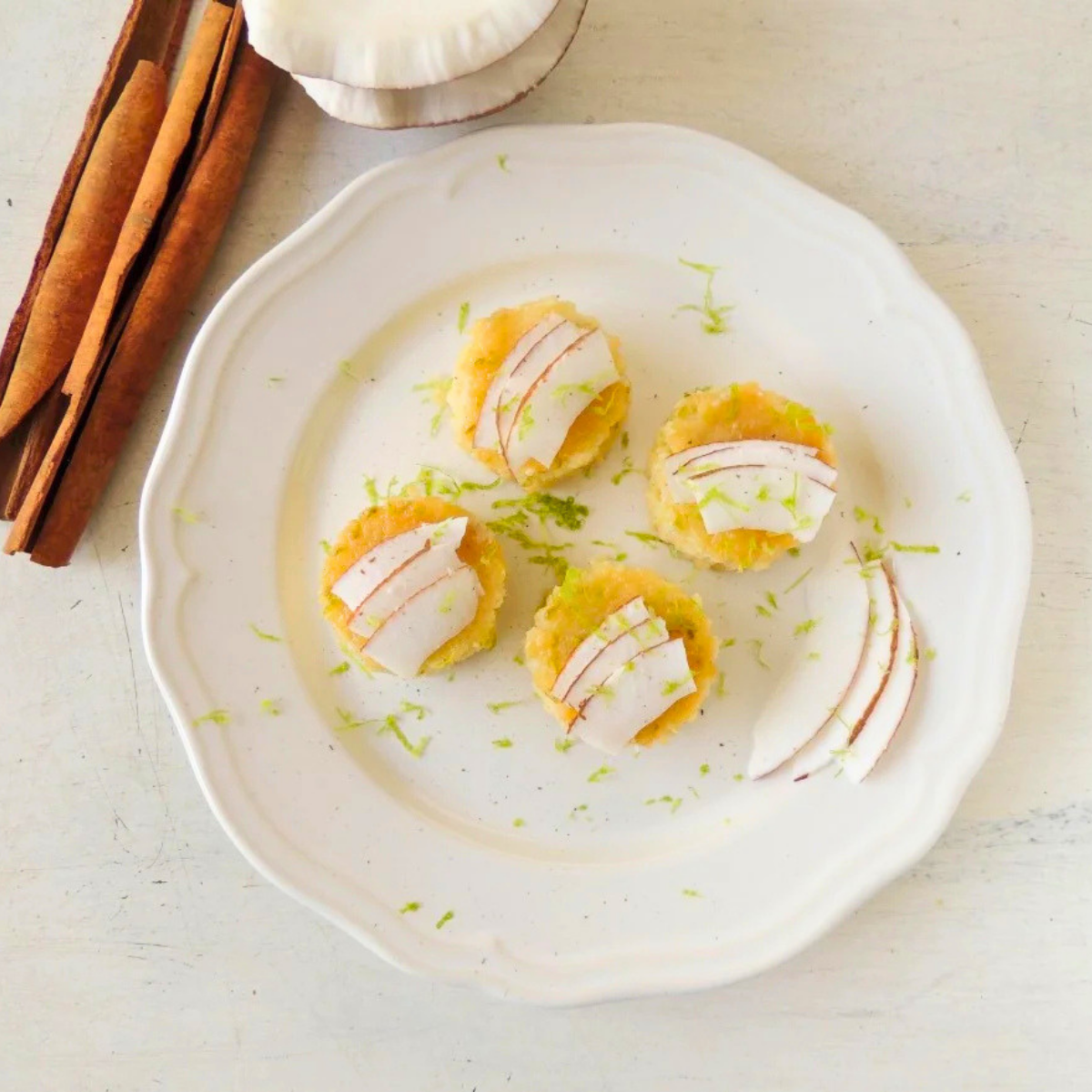
Thank you for sropping by! This is a baked coconut dessert recipe, it was baked in a big baking dish and I cut it in circles to make them look cute on the picture, so you should try this one and tell me all about it.
Hi Petit Gourmet,\
I love baked grated coconut dessert.
can i substitute the coconut milk with buttermilk or simple milk to give it moistness? i know that it will change the taste, but will it change the texture?
Hey James,
yes you could use any alternatives. Have a nice day!