I was sitting at my kitchen table, the same one where I have made hundreds of batches of sofrito, where Patrick and I have had every important conversation of our marriage, going through my AFPA Holistic Nutrition coursework, when I read a number that made me put down my coffee.
Table of Contents
The Number That Made Me Put Down My Coffee
Not because the number was complicated. Because I realized that I, a woman who had spent 18 years being extremely intentional about everything she ate after bariatric surgery, who had cooked professionally for years, who was actively studying nutrition with a national board, had been under-eating protein for most of my adult life. And I had no idea.
The number was 1.2 to 1.6 grams of protein per kilogram of body weight, per day. For women over 45.
That is significantly more than the 0.8 grams per kilogram Recommended Daily Allowance most of us have heard our entire lives. For a 150-pound woman, it means 82 to 109 grams of protein every single day. Not as an athletic goal. Not to look like a fitness influencer. As the baseline, the floor, the minimum, for maintaining the muscle you already have.
I think about all the women in my community right now, eating their arroz, their habichuelas, their small piece of pollo, thinking they are doing everything right. And quietly losing ground.
This is the post I wish someone had handed me ten years ago.
Why the Standard Protein Recommendation Is Wrong For Us
The 0.8 grams per kilogram RDA was established decades ago, calculated from studies done largely on young men in their twenties and thirties. It tells you the absolute minimum protein required to prevent your body from breaking down its own tissue. That is it. It is a survival number, not a thriving number.
For a young, healthy, hormone-stable body, that minimum can be enough. For a woman in perimenopause or menopause, it is a slow setup for everything we have been told is “just aging.”
The research community has known this for a decade. The recommendations have updated. Most of us, including most doctors, are still working from an outdated guideline that was never designed for us in the first place.
Studies on protein needs in older adults, particularly the work of researchers like Stuart Phillips at McMaster University, have repeatedly shown that women over 45 require closer to 1.2 to 1.6 grams per kilogram to maintain muscle mass, regulate appetite, and support healthy aging. Some research goes even higher for women actively building or rebuilding strength.
Translated into food: if you weigh 150 pounds, that is roughly 30 to 40 grams of protein at every single meal. Three times a day. Without skipping.
Most of us are nowhere near it.
What Perimenopause Actually Does to Your Protein Metabolism
This is where it gets personal, and where the science finally explains what so many of us have been feeling.
Estrogen decline reduces muscle protein synthesis. Estrogen does not just regulate your cycle. It plays an active role in signaling your muscles to absorb amino acids, the building blocks that come from the protein you eat. As estrogen drops in perimenopause, the same amount of protein produces a smaller muscle-building response. This is called anabolic resistance. In plain language: you have to eat more protein to get the same result you got at 35. The plate that worked then does not work now.
Cortisol becomes more dominant. Hormonal fluctuations in your forties and fifties tend to elevate cortisol, the stress hormone. Cortisol is catabolic, meaning it breaks down muscle tissue, especially in the absence of adequate protein and sleep. Higher protein intake directly buffers against this effect.
Muscle is metabolically expensive, and it is leaving you. Starting around age 40, women lose roughly 1 percent of their muscle mass per year without intervention. By age 60, that is a 20 percent reduction. Muscle is the most metabolically active tissue in your body. It burns calories at rest. Losing it is the actual reason for the “midlife metabolism slowdown” that women everywhere blame on aging. It is not aging. It is preventable muscle loss.
Your gut absorbs protein less efficiently. Stomach acid declines with age, and so does your ability to fully break down and absorb the protein you eat. This means even the protein you do consume is delivering less than it would have at 30.
Add these four together and you have the explanation for why women I work with feel like they are doing everything right and getting nothing back. They are not doing anything wrong. The math just changed.
What Happens When You Don’t Get Enough Protein After 45
The signs are quiet, gradual, and very easy to mistake for “just getting older.” Most of them are not.
Sarcopenia, which means muscle loss. Strength quietly disappears. The grocery bags feel heavier. Stairs feel longer. Posture begins to slump. This is the most under-recognized health issue in women over 50.
Bone density loss. Protein is essential for the bone matrix itself, not just calcium. Low protein intake accelerates the osteoporosis risk that estrogen decline already elevates. Hip fractures in women over 65 have a one-year mortality rate of around 20 percent. This is not a vanity issue.
Hair, skin, and nails change. Collagen production drops without enough dietary protein to supply the amino acids. Hair thins. Nails split. Skin loses elasticity faster than it should.
Slow healing and frequent illness. Antibodies are proteins. Wound healing requires protein. When you under-eat protein, your immune system has fewer resources to work with.
Constant hunger and afternoon crashes. Protein is the macronutrient that signals satiety to your brain. Low-protein meals leave you reaching for crackers at 3pm and wondering why your willpower is broken. Your willpower is not broken. Your blood sugar is on a roller coaster because your meal had four grams of protein and sixty grams of carbohydrates.
Stubborn weight gain, particularly around the middle. The cortisol-insulin-low-protein triangle is the actual mechanism behind perimenopausal belly fat that diets do not touch.
If you have been told all of this is just what happens after 45, I am here to tell you that most of it is correctable. Not all of it, but most of it. And protein is the lever.
The Latina Specific Problem
I have to say this part out loud, because nobody else is going to.
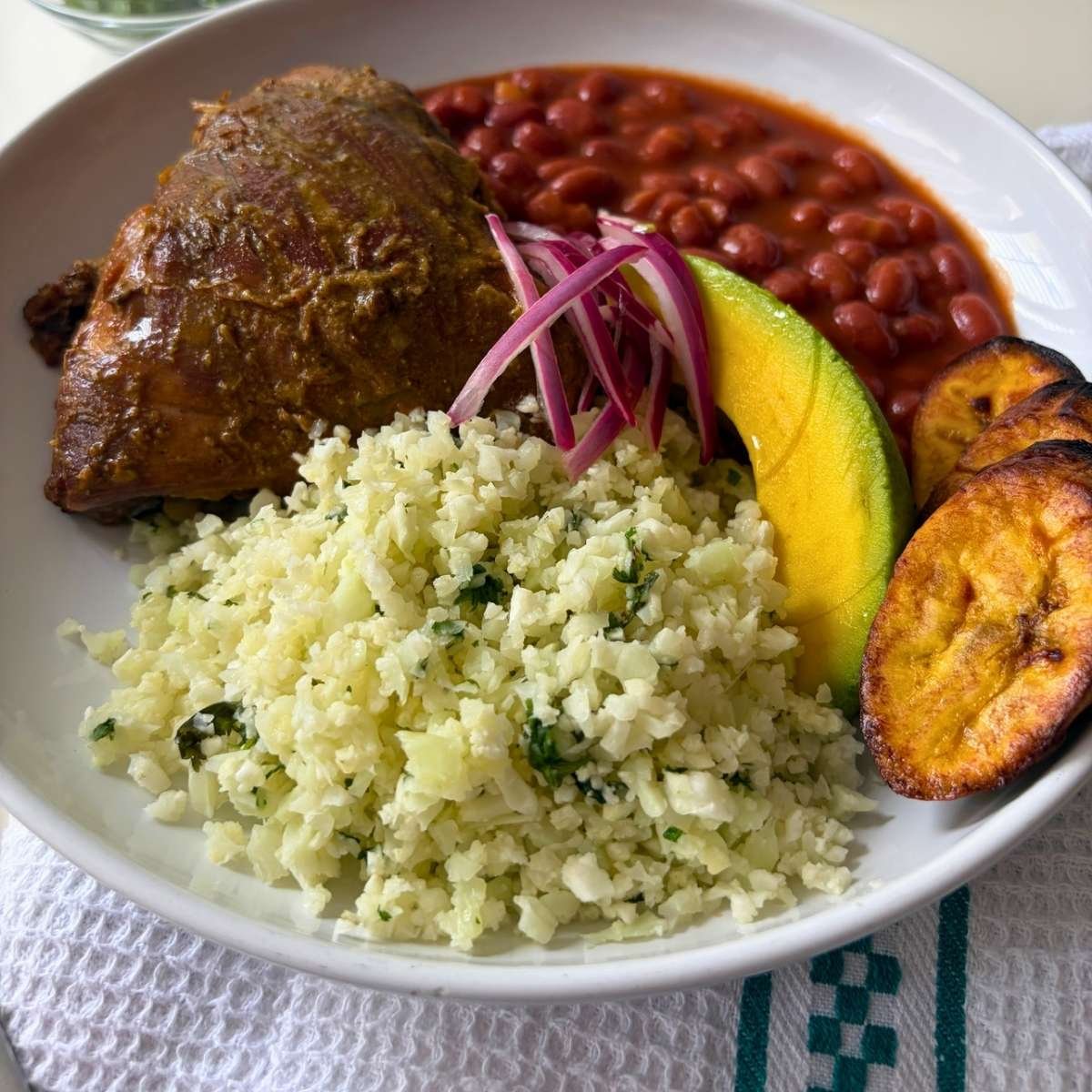
The traditional Dominican plate, and most Latin American plates, are starch-forward. Rice, plátanos, viveres, beans, with a small portion of meat or fish on the side. This way of eating sustained generations of women who worked hard physically, started having children at 22, and rarely lived past 70.
It does not work for the woman you are right now.
We live longer. We work sitting down. We deliver our first babies at 35. We hit perimenopause with more muscle to protect and more decades to protect it for. The same plate that nourished my grandmother is the same plate that left me, my mother, and most of the women in my Sazón Club community quietly under-eating protein.
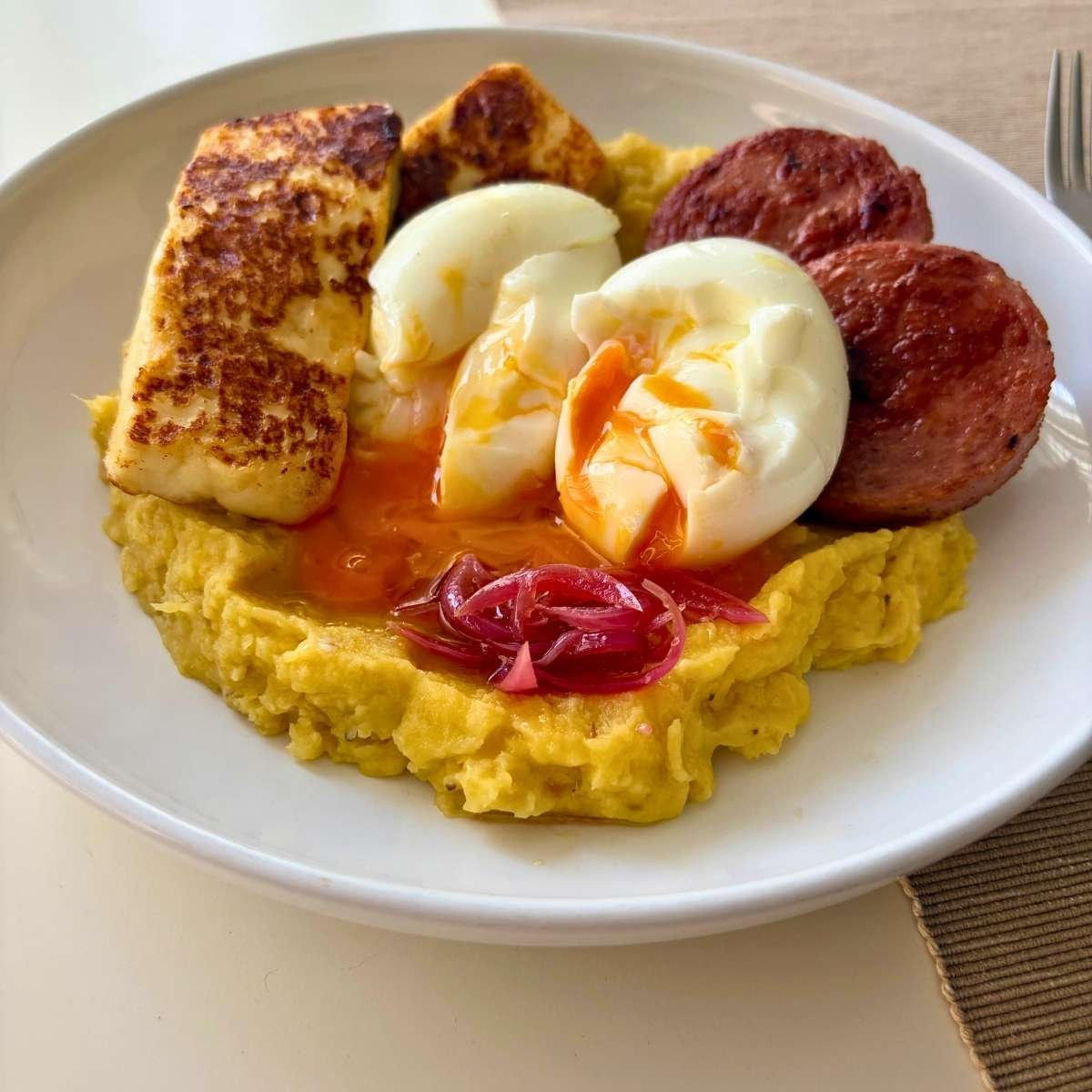
This is not about abandoning our culture. I am Dominican. My food is who I am. I cook sofrito every Sunday. I will die before I give up my mangú con queso frito.
But the modern Dominican plate needs to be rebuilt for the modern Dominican woman. The protein gets more space. The rice gets smarter. The beans get bigger portions. The chicken gets a crusted upgrade. The sazón stays the same.
That is what Strength & Sazón is. That is the whole project.
How to Hit Your Protein Numbers Through Latin Food
Here is the math I run for every woman who asks me how to start.
Calculate your number first. Take your weight in pounds, divide by 2.2 to get kilograms, multiply by 1.2 (minimum) to 1.6 (active rebuilding). That is your daily target.
Example: 165 pounds. 165 divided by 2.2 = 75 kilograms. 75 times 1.2 = 90 grams of protein daily, minimum. 75 times 1.6 = 120 grams daily if you are actively training or rebuilding.
Divide it across three meals plus one snack. For a 90-gram target: roughly 25 grams per meal plus 15 grams from a snack. For a 120-gram target: roughly 35 grams per meal plus 15 grams from a snack.
Build every meal protein first. Decide your protein, then build the plate around it. This is the single mental shift that changes everything. We are trained to think rice and beans, then add meat. Flip it. Decide your meat or fish, then build sides that support it.
Protein sources already in your kitchen, with macros:
- Pollo guisado, 4 oz chicken thighs: 28g protein
- Mahi mahi or red snapper, 5 oz: 35g protein
- Habichuelas rojas cooked in bone broth, 1 cup: 18g protein (paired with rice, this becomes a complete protein)
- Greek yogurt, 1 cup full fat: 17g protein
- Eggs, 3 large: 18g protein
- Queso blanco fresh, 3 oz: 21g protein
- Pernil lean cut, 4 oz: 32g protein
- Bistec encebollado, 4 oz beef: 30g protein
- Tuna packed in olive oil, 1 can: 24g protein
- Longaniza Dominicana, 3 oz: 18g protein (use as accent, not main)
- Camarones, 5 oz: 30g protein
- Cottage cheese, 1 cup full fat: 25g protein
- Casabe with queso blanco breakfast: 22g protein combined
The smart supplement, when food alone is hard. I keep unflavored collagen peptides in my kitchen for two reasons. One scoop into the morning coffee gives me 9 to 11 grams of protein without changing the taste at all. The other reason is that collagen specifically supports the connective tissue that estrogen loss attacks first. Vital Proteins, Further Food, and Ancient Nutrition are all clean brands. Look for grass-fed bovine collagen with no fillers.
I do not believe in protein powders as a meal replacement. I believe in them as a tool when life is moving fast and the food is not ready yet.
What 90 Grams of Protein Looks Like in a Real Day
This is not a meal plan. This is my actual Tuesday last week.
Morning, around 8am. Coffee with one scoop of collagen peptides stirred in. Three eggs scrambled with sofrito and a slice of queso blanco. Total: 28g protein.
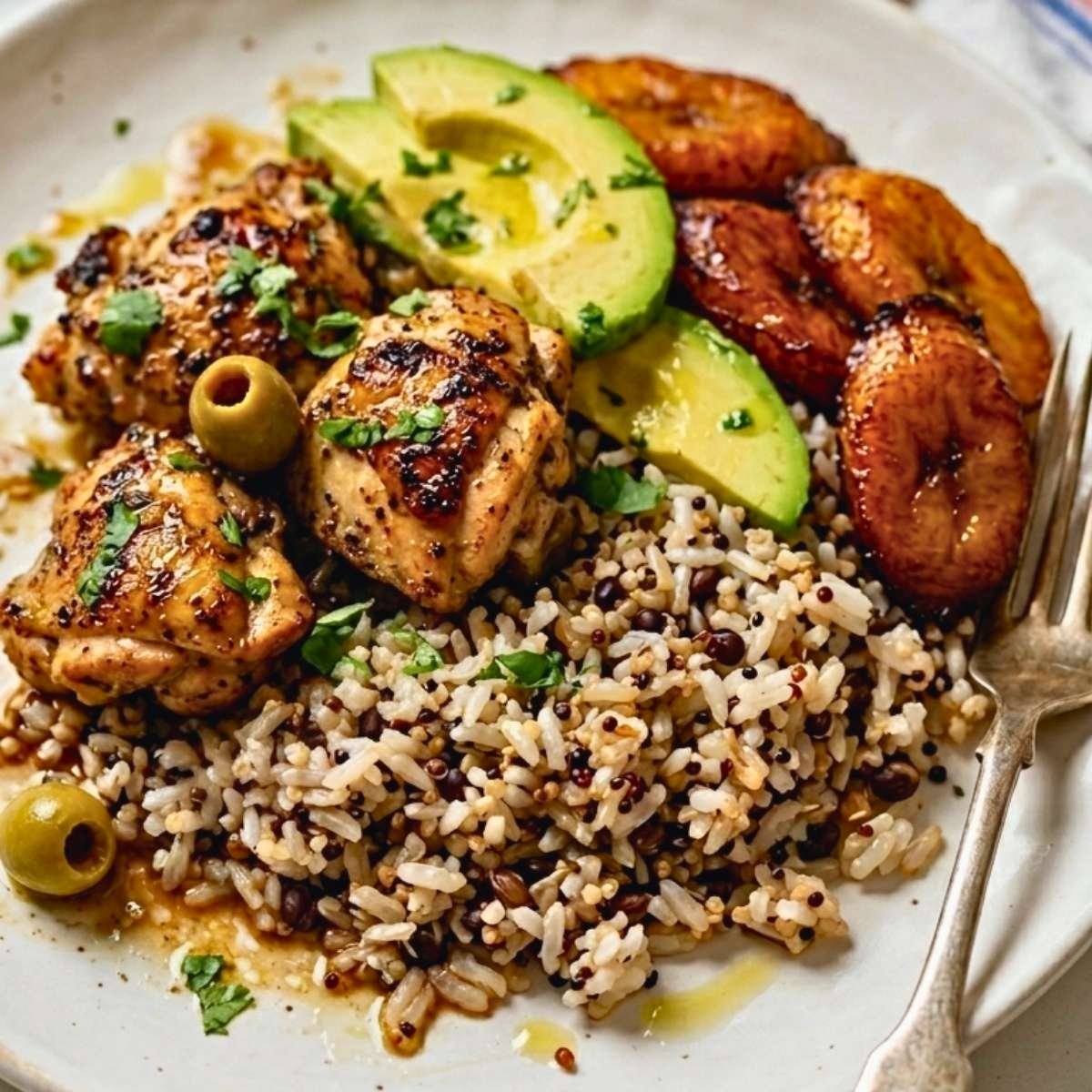
Lunch, around 1pm. A bowl of high protein rice, 4 oz of pollo guisado on top, half an avocado, a small handful of green salad with naranja agria vinaigrette. Total: 33g protein.
Snack, around 4pm. One cup of Greek yogurt with a tablespoon of peanut butter and cinnamon. Total: 20g protein.
Dinner, around 7pm. A piece of red snapper, baked with garlic and lime, on top of a bed of cauliflower rice mixed with the leftover high protein rice from lunch, a side of steamed chayote. Total: 30g protein.
Daily total: 111 grams of protein. Well above my minimum, comfortable, full all day, no cravings, no afternoon crash. Eating food I actually want to eat. Made by me. In my own kitchen.
This is what I am asking you to aim for.
Where to Start If This Feels Overwhelming
If you read this whole post and you are sitting there thinking, “I do not even eat 50 grams of protein a day right now,” here is what I want you to do.
Pick one meal. Just one. Make it the protein-forward meal of your day. Most women have the easiest time with breakfast because it is the meal furthest from family expectations and traditions. Start there. Get to 30 grams at breakfast every day for two weeks. That is it.
Once that becomes automatic, layer in lunch. Then dinner.
You do not need to overhaul your entire life. You need to add a scoop of collagen to your coffee, an extra egg to your scramble, a piece of queso blanco on your casabe, a bigger portion of meat in your pollo guisado.
The Smart Swap System I built for the Dominican High-Protein Recipe Guide is exactly this. Every recipe takes a traditional Dominican dish and shows you the small, often invisible, swap that doubles the protein without changing what your family expects to taste.
Your culture is not the problem. The information you were given was incomplete. You can fix that starting tomorrow morning.
FAQ
How much protein should I eat after 45?
Aim for 1.2 to 1.6 grams of protein per kilogram of body weight per day. For most women, that is 80 to 120 grams of protein daily, split across 3 meals and a snack at roughly 25 to 35 grams per meal.
Can I get enough protein from beans alone after 45?
Plant proteins are excellent, but after 45 the anabolic response to plant protein is weaker than to animal protein. Most women in midlife do best with a mix that leans somewhat on animal sources like fish, chicken, eggs, dairy, with beans and lentils as complements. If you are vegetarian or vegan, you will need to eat larger volumes of plant protein and pay close attention to lysine and leucine.
Will eating more protein hurt my kidneys?
This is one of the most persistent myths in nutrition. For people with healthy kidneys, higher protein intake within the 1.2 to 1.6 g/kg range is well-tolerated and shows no adverse effects on kidney function in long-term studies. If you have existing kidney disease, talk to your nephrologist before increasing protein.
Is too much protein going to make me bulky?
No. Building visible muscle in a woman over 45 requires consistent resistance training, a calorie surplus, and years of effort. Protein supports muscle preservation, not bulk. Most of my readers find they look tighter and feel stronger, not bigger.
What about protein and weight loss after 45?
Higher protein intake is one of the few interventions that consistently supports fat loss while preserving muscle in midlife women. Protein has the highest thermic effect of any macronutrient, meaning your body burns more calories digesting it. It also signals satiety more powerfully than carbs or fat.
Do I need a protein powder?
Not necessarily. If you can hit your numbers through food, food is always better. Powders are useful when life is busy, when you are traveling, or when you need an easy 15g boost. Collagen peptides are the most flexible because they dissolve into coffee, sauces, and rice without changing flavor.
Reader Review
“Gaila, I read this post twice and then I went and made the protein math for myself. I have been under-eating by half. Half. I have been blaming my age for things that were just bad information. Thank you for being honest with us.”
- Yelitza M., Sazón Club member
If this post helped you, the full Smart Swap System and 28 macro-verified Dominican recipes built around exactly this protein math are in my Dominican High-Protein Recipe Guide. Every recipe shows you the protein number, the swap, and the bariatric phase notes if you need them.
Real Dominican food. Rebuilt for the woman you are right now.
Con Fuerza y Sazón,
Gaila
AFPA Certified Holistic Nutritionist · Dominican Cook · Bariatric Patient