
There is a version of this dish that has lived on Dominican tables for generations, though you may not have seen it written down anywhere. Huevos guisados, eggs stewed in a sofrito-based sauce, is the kind of recipe that gets made on the mornings when there is not much in the kitchen, and someone still needs to eat well. A few eggs, some onion, a tomato, a little vinegar. Twenty minutes. Done.
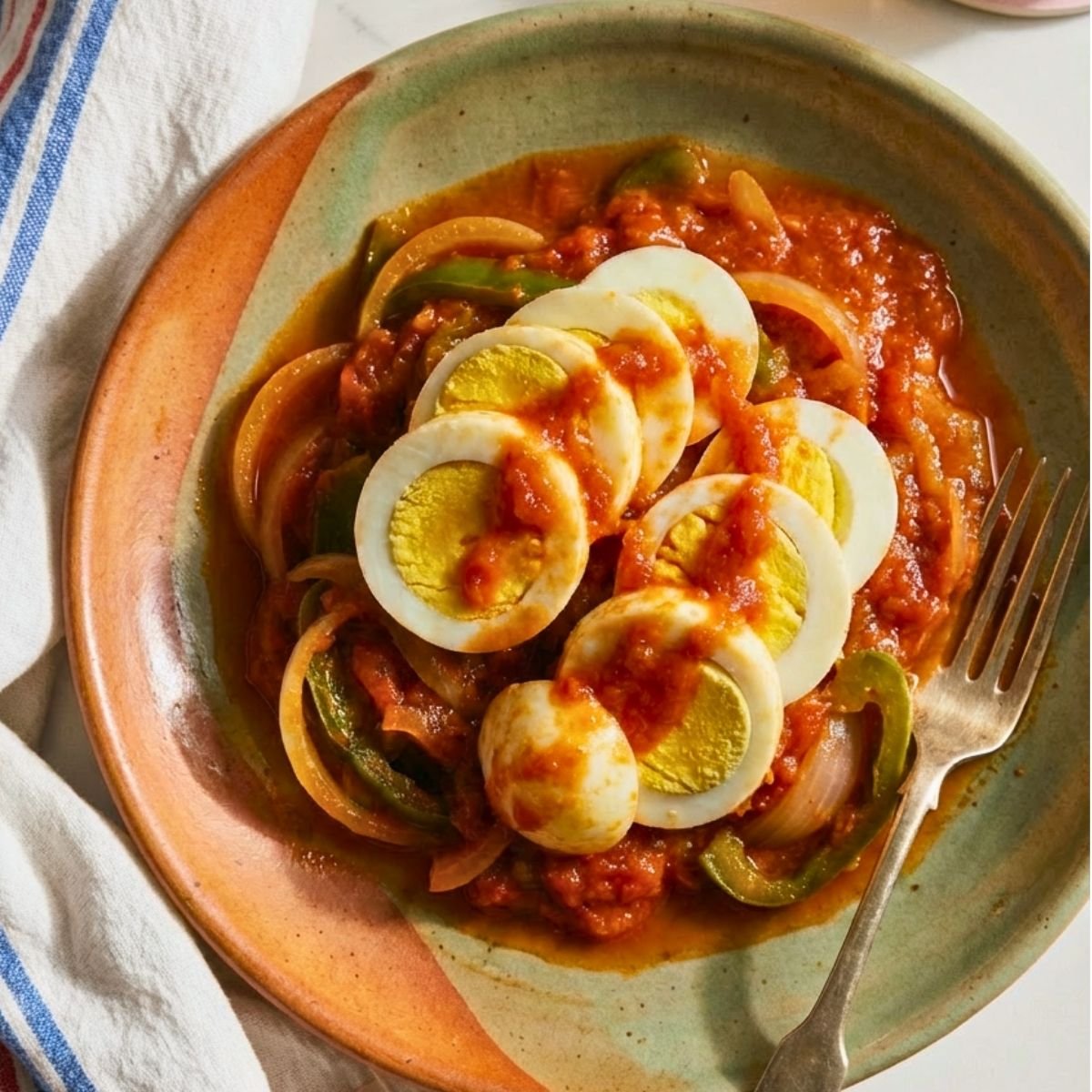
This version adds the escabeche element, the tangy, vinegar-brightened sauce built from slow-cooked onions, cubanelle pepper, and plum tomatoes, that transforms a simple egg stew into something that tastes considered. The kind of dish that makes you wonder why you ever reached for anything else at breakfast.
At 18g of protein per serving with minimal fat and virtually no carbohydrates, this is also one of the most bariatric-compatible Dominican recipes I know. The escabeche sauce keeps the egg yolks moist, eliminating the dryness that makes plain hard-boiled eggs difficult to eat post-op. The apple cider vinegar supports blood sugar regulation. And the whole thing takes 15 minutes from cold start to plate.
This is the recipe I reach for when I need something fast, filling, and completely mine.
Protein Score:
- Protein Balanced: ~18g protein per serving (3 eggs).
- Boost to Protein Powerhouse (25g+) by using 4 eggs per serving or pairing with a Greek yogurt crema drizzle.
Bariatric Note:
The escabeche sauce keeps the egg yolks moist, which is the single most common complaint about hard-boiled eggs post-bariatric surgery. This recipe was designed with that in mind. Appropriate from Stage 4 (soft foods) onward.
What Makes This Dish an Escabeche, and Why That Matters
Escabeche is one of the oldest preservation and flavor techniques in Latin and Mediterranean cooking, a method of cooking proteins or vegetables in an acidic sauce built from vinegar, aromatics, and often olive oil, then allowing the acid to penetrate and transform the ingredient.
In Dominican cooking, escabeche typically appears in two forms: the guineitos en escabeche (green bananas in pickled onion sauce) and as a preparation for fish or chicken. The escabeche element here, apple cider vinegar added to slow-cooked onions, peppers, garlic, and tomato, does three things at once:
- It creates the tangy brightness that makes the sauce alive rather than flat.
- It softens the onions into something silky and complex rather than sharp.
- It provides the moisture that makes the egg yolks easy to eat, critical for bariatric patients and anyone who finds dry hard-boiled yolks unpleasant.
The result is a sauce that tastes like it spent hours developing, but was built in under 15 minutes.
Optional boosting:
- Collagen peptides: Add 1 scoop of unflavored collagen to the broth before adding it to the sauce. It dissolves invisibly and adds 9–10g protein to the full batch.
- Bone broth instead of water: Low-sodium chicken or beef bone broth adds depth and additional protein without changing the flavor profile.
- Fresh cubanelle over bell pepper: Milder, sweeter, more authentic Dominican flavor.
- Recao (culantro) leaf: Add 1 leaf with the garlic if you have it. More complex than cilantro alone.
Ingredients
- 12 large eggs: Hard-boiled and peeled. You can leave them whole or slice them in half lengthwise; halving allows the sauce to penetrate the yolk surface for more flavor.
- 1 red onion: Sliced into thin rings. Red onion is traditional in escabeche; it has a deeper flavor and holds its color even after cooking making the dish beautiful.
- 1 green bell pepper or cubanelle: Sliced into thin strips. Cubanelle is the more authentic choice, milder and sweeter than a bell pepper, closer to what a Dominican kitchen would use.
- 2 plum tomatoes: Chopped. Plum tomatoes have less water than beefsteak; they build a thicker sauce.
- 1 tbsp tomato paste: For richness color, and body. This is the difference between a thin liquid and a real sauce.
- 2 garlic cloves: Minced fine. Not optional.
- ¼ cup water or low-sodium chicken bone broth: Bone broth adds collagen depth, and a few extra grams of protein. Use it.
- 1 tbsp apple cider vinegar: The escabeche element. Do not substitute white wine vinegar; ACV has a softer slightly fruity acidity that complements the tomato.
- Fresh cilantro: Roughly chopped for garnish. A generous handful this is not decorative; it is flavoring.
- Salt and black pepper: To taste. Taste the sauce before seasoning; the tomato paste and broth both carry sodium.
- 1 tsp olive oil: For sautéing. Just enough to coat the pan.
Instructions
- Prep the eggs: Boil eggs 9 to 10 minutes for fully hard yolks, cool in an ice bath for 2 minutes, peel, and set aside. Slice lengthwise if desired, halved eggs absorb the escabeche sauce better and look beautiful plated.
- Sauté the aromatics: Heat olive oil in a medium skillet over medium heat. Add sliced red onion and green pepper. Sauté 3 to 4 minutes, stirring occasionally, until the onion is translucent and just beginning to soften. The goal is tender-soft, not browned.
- Build the sazón: Add minced garlic and chopped tomatoes. Cook 2 more minutes, stirring, until the tomatoes begin to break down and release their juices.
- Create the escabeche sauce: Stir in tomato paste, apple cider vinegar, salt, and pepper. Add the water or bone broth slowly, stirring to incorporate. Reduce heat to low and simmer 5 minutes until the sauce thickens and the flavors fully meld, it should coat a spoon and smell deeply savory with a bright acidic lift.
- Stew the eggs: Gently nestle the hard-boiled eggs into the sauce. Spoon the sauce and onions over the eggs generously. Let them simmer together 2 to 3 minutes, just enough for the eggs to absorb the flavor and warm through completely.
- Finish and serve: Garnish with plenty of fresh cilantro. Serve immediately directly from the pan, or plate over cauliflower rice with fresh avocado alongside.
Nutrition
Gaila’s Pro Tip: Serve this over a small portion of cauliflower rice or with a side of fresh avocado. The healthy fats in the avocado, combined with the vinegar in the sauce, help keep energy levels stable all morning, and push the meal into Protein Powerhouse territory when paired with a Greek yogurt drizzle.
Nutrition Per Serving
Per serving (3 eggs + half the sauce):
| CALORIES | PROTEIN | FAT | CARBS | NET CARBS | FIBER |
| ~228 | ~18g | ~14g | ~8g | ~6g | ~2g |
Protein Boost Options: 3 eggs = ~18g. 4 eggs per serving = ~24g. Add 1 scoop of collagen to the broth = +9–10g for the full batch. Drizzle Greek yogurt crema on top = +5g per serving.
Why It’s Good For You
Why It’s Good For You: Eggs are a complete protein — they contain all nine essential amino acids your body needs for muscle repair and hormone production. At 3 eggs per serving, you reach close to 18g of protein from a food that is also rich in choline (critical for brain function and liver health, often depleted after bariatric surgery), lutein and zeaxanthin (eye health), and vitamin D. The escabeche sauce adds its own nutritional layer: red onion is one of the richest sources of quercetin, a powerful anti-inflammatory flavonoid, and apple cider vinegar supports blood sugar regulation by slowing gastric emptying and reducing post-meal glucose spikes. Olive oil provides monounsaturated fats that support hormone synthesis — particularly relevant for women in perimenopause and menopause.
Storage & Reheat: Refrigerate the egg and sauce together in an airtight container up to 3 days. The flavor deepens overnight; this dish is genuinely better on day 2. Reheat gently in a small pan over low heat with a splash of water or broth, 3 to 4 minutes. Do not microwave on high, it makes the egg whites rubbery. Sauce freezes well for up to 2 months; freeze without the eggs and add fresh-boiled eggs when reheating.
Bariatric Compatibility by Stage
- Stage 2 (Full Liquid): Blend the sauce completely smooth. The egg yolks alone (blended into broth) are appropriate; full whites introduce too much texture at this stage.
- Stage 3 (Pureed, 3–4 weeks): Blend eggs and sauce completely smooth together. The escabeche sauce carries the protein and flavor even when fully pureed. Add a splash of bone broth for consistency.
- Stage 4 (Soft Foods, 5–8 weeks): Full recipe, eggs cut into small pieces. The sauce keeps the whites moist enough to eat comfortably. Chew thoroughly. This is where the escabeche element becomes the bariatric advantage; no dry egg whites.
- Stage 5 (General Bariatric, 8+ weeks): Full recipe as written. Serve with cauliflower rice for a complete meal. Protein first; eat the eggs before the rice.
- Fat intolerance consideration: Use the minimum olive oil (½ tsp is sufficient) and ensure the longaniza, if added as a variation, is fully drained of fat on paper towels before adding. The base recipe is inherently low-fat.
💡 The Moisture Advantage: The most common bariatric complaint about eggs is dryness, specifically of the yolk. The escabeche sauce solves this completely. The acidic liquid penetrates the yolk surface during the 2–3 minute stew, and the result is a moist, sauce-coated egg that eats nothing like a plain hard-boiled egg. This is not a coincidence. This is why the technique exists.
How to Serve It
The classic Dominican way:
Directly from the pan, yolk-side up, with white rice, a side of ensalada dominicana, and half an avocado. This is the full plate. This is the meal.
The bariatric-smart plate:
2 to 3 halved eggs over ½ cup cauliflower rice, with the sauce spooned generously over everything. Fresh avocado on the side. Greek yogurt crema drizzled over the top. 25g+ protein, under 300 calories.
The weekday breakfast:
Eggs straight from the fridge (made Sunday), sauce reheated in a pan, served on gluten-free toast or alongside casabe. Under 20 minutes total with prep-ahead eggs.
The high-protein boost:
Add a Garlic-Lime Greek Yogurt Crema drizzle over the finished dish. It adds 10g of protein per ½ cup, a cool creaminess that contrasts the warm, tangy sauce, and turns a simple egg dish into something that belongs on a restaurant plate.
Frequently Asked Questions.
Can I make this ahead for the week?
Yes, and it is actually better the next day. Boil the eggs and make the sauce on Sunday. Store together in a sealed container in the fridge for up to 3 days. Reheat gently on the stovetop each morning in about 3 minutes. The flavor deepens as the eggs sit in the escabeche sauce overnight.
Can I use this sauce on other proteins?
Absolutely. This escabeche sauce works beautifully over shredded pollo guisado, pan-seared fish (tilapia, mahi-mahi), or even sliced longaniza. The technique is transferable, the sauce is the recipe. Once you learn it, you use it on everything.
What is the difference between guisado and escabeche?
Guisado refers to the technique, stewing in a sauce, usually sofrito-based. Escabeche refers to the acidic element, the vinegar-pickled quality of the sauce. This recipe is both a guisado-technique egg stew with an escabeche flavor profile. You get the depth of a sofrito-built sauce and the tangy brightness of a vinegared escabeche in one pan.
Can I use egg whites only for lower fat?
Yes. Hard-boil whole eggs, remove the yolks after peeling, and stew the whites only in the sauce. Protein per serving stays close to the same (whites carry most of the egg protein). Fat drops significantly. This is a useful variation for anyone managing fat intolerance or in early post-bariatric stages.
Is this recipe good for blood sugar management?
Yes, for several reasons. Eggs have virtually no glycemic impact; they do not raise blood sugar. The apple cider vinegar in the escabeche sauce slows gastric emptying, which reduces post-meal glucose spikes. The olive oil buffers any carbohydrate absorption from the tomato and onion. If serving with a side, cauliflower rice keeps the plate very low-glycemic. If serving with regular rice, the protein-first strategy (eggs before rice) reduces the glycemic response of the meal.
What does ‘a buen tiempo’ mean at the end of the original recipe?
It is a Dominican expression that roughly translates as ‘right on time’ or ‘just in time’; the sense that something arrived exactly when it was needed. Which is exactly what a 15-minute, high-protein, culturally grounded recipe should be. A buen tiempo. 🇩🇴
You Might Also Love
- 🍳 Longaniza Egg Scramble (32g protein) – another Dominican egg protein anchor
- 🧄 Garlic-Lime Greek Yogurt Crema – the perfect drizzle to push this to 25g+
- 🍗 High-Protein Pollo Guisado (38g) – use the same escabeche sauce technique on chicken
Made This? Tag Me.
I want to see your escabeche. Follow @Strengthandsazon on Instagram, snap a photo, and tag #Strengthandsazon – I share reader photos with the community every week. Egg dishes are some of my favorites to see on your tables.
Save this to your Pinterest boards – the right recipe on the right Wednesday morning matters. Make sure you can find it again.
📥 Want 25 more recipes built the same way? Download the Pantry Audit Guide → Your pantry is either working for you or against you. Most of the time, you don’t even know which.
- La Desensa Inteligente is a quick audit that shows you exactly what to keep, what to swap, and what Dominican and Latin staples are already high-protein, blood sugar-friendly, and bariatric-safe – sitting in your kitchen right now.
- No expensive specialty products. No throwing out your sofrito. Just a clearer picture of what you already have and how to use it better.
- Download it for free. Your kitchen is closer to working for you than you think.
Con Fuerza y Sazón,
Gaila
AFPA Certified Nutritionist · Dominican Cook · Bariatric Patient