Nobody makes pasteles alone. That is the first thing to understand.
You make them with whoever shows up in the kitchen that morning. Someone grates the plantains. Someone seasons the meat. Someone folds and ties each one, faster than you, because they have been doing it since they were seven years old and their hands know the motion. The kitchen fills up. Nobody complains about the space. This is the work and the work is the celebration.
Pasteles en hoja are the Dominican version of the tamal - except the dough is made from green plantains instead of corn, wrapped in plantain leaves or parchment instead of cornhusks, and the filling is seasoned ground beef or pork cooked in sofrito. They are labor-intensive in the best possible way. The kind of labor that produces something you cannot buy anywhere, that exists only because someone in your family made it with their hands that morning.
This version uses 93% lean ground beef - the same seasoning, the same sofrito, the same plantain dough - built to deliver 28g of protein in three pasteles. The family kitchen tradition is intact. The nutritional result is not the same as your grandmother's version and that is exactly the point.
PROTEIN SCORE
Base protein: 21g per serving (2 pasteles) | Tier: Powerhouse
The protein in pasteles en hoja comes from two sources - the lean ground beef in the filling (approximately 22g per 4oz serving of 93% lean) and the small amount of protein in the plantain dough itself. Three pasteles at this filling ratio delivers 21g of complete animal protein. For a holiday food that is traditionally not thought of as a protein vehicle, this is a significant result. The swap from standard ground beef to 93% lean reduces fat by approximately 40% while maintaining all the flavor of the sofrito-cooked filling.
PROTEIN BOOST OPTIONS
- Increase the beef filling by 1 tablespoon per pastel - each additional tablespoon adds approximately 3g protein
- Use ground turkey (93% lean) in place of ground beef - same technique, slightly higher protein per ounce, noticeably different flavor profile (beef is more traditional)
- Add ¼ cup cooked white beans to the filling per batch - adds 4g plant protein per serving and stretches the filling without changing the texture inside the pastel
- Serve alongside [High-Protein Puerco Asado] - the combined plate makes pasteles the side dish and the pork the main, which is architecturally correct for a full Noche Buena.
WHY YOU'LL LOVE THIS RECIPE
- Plantain dough made from green plantains is naturally gluten-free - this is not a modification, it is what the recipe has always been, and it is one of the most extraordinary gluten-free doughs in any cuisine
- The sofrito-cooked beef filling is the same as your grandmother made - homemade sazon, cubanelle, garlic, olives, capers, the whole Dominican flavor profile in concentrated form
- 93% lean ground beef reduces the fat in the filling without reducing the flavor because the flavor comes from the sofrito, not the fat
- Parchment paper replaces plantain leaves when leaves are not available - functionally identical for wrapping, significantly easier to source in the continental US
- The dough recipe below is scaled to make 12 pasteles - enough for a family gathering, small enough to be manageable for a first attempt
- Pasteles freeze exceptionally well before boiling - make a large batch in November, freeze, and boil directly from frozen on Christmas Eve. The quality is indistinguishable from fresh.
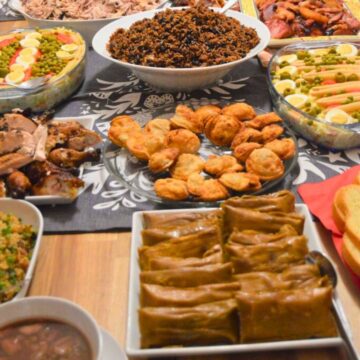
High-Protein Pasteles en Hoja - Dominican Plantain Pockets with Seasoned Beef
Ingredients
INGREDIENTS - PLANTAIN DOUGH (MASA):
- 6 large green plantains peeled
- ¼ cup chicken bone broth
- 3 tablespoon annatto oil achiote oil - 3 tablespoon olive oil heated with 1 tablespoon annatto seeds 5 minutes, seeds strained out
- 1 teaspoon fine sea salt
- ½ teaspoon homemade sazon cumin + coriander + turmeric + garlic powder + oregano
INGREDIENTS - BEEF FILLING (RELLENO):
- 1 lb 93% lean ground beef
- 3 tablespoon homemade sofrito cubanelle + garlic + red onion + cilantro + bija + oregano
- 3 garlic cloves minced
- ¼ cup red onion finely diced
- ¼ cup cubanelle pepper finely diced
- ¼ cup green olives sliced
- 1 tablespoon small capers rinsed
- 2 tablespoon tomato paste
- ½ cup chicken bone broth
- 1 teaspoon homemade sazon
- 1 teaspoon apple cider vinegar
- ½ teaspoon fine sea salt
- ¼ teaspoon black pepper
- ¼ teaspoon cumin
- Optional: 2 tablespoon raisins traditional in some families
INGREDIENTS - WRAPPING AND BOILING:
- 12 pieces parchment paper cut to approximately 12x12 inches
- Kitchen twine for tying
- Large pot of well-salted boiling water
Instructions
- Heat 1 tablespoon olive oil in a large skillet over medium-high heat. Add onion and cubanelle and cook 3 minutes. Add garlic and cook 1 minute more. Add sofrito and cook 2 minutes until fragrant.
- Add ground beef and cook, breaking up with a wooden spoon, until no pink remains - approximately 8 minutes. Drain any excess fat.
- Add tomato paste and stir to coat. Add sazon, salt, pepper, cumin, ACV, and bone broth. Stir to combine. Add olives, capers, and raisins if using.
- Simmer over medium-low heat 10-12 minutes until the liquid is mostly absorbed and the filling is moist but not wet. It should hold its shape when spooned. Taste and adjust salt. Cool completely before filling the pasteles - warm filling makes the dough slippery and difficult to work with.
INSTRUCTIONS - MAKE THE DOUGH:
- Grate the green plantains using the fine side of a box grater - or process in a food processor until the texture is fine and paste-like. This is the most labor-intensive step and the one where having another person in the kitchen matters most.
- Transfer grated plantain to a large bowl. Add annatto oil, bone broth, salt, and sazon. Mix thoroughly with your hands until a smooth, workable dough forms. The dough should be slightly tacky but not sticky. If it is too dry, add bone broth 1 tablespoon at a time. If it is too wet, add 1-2 tablespoon more grated plantain.
INSTRUCTIONS - ASSEMBLE:
- Lay a piece of parchment on a flat surface. Brush lightly with annatto oil. Place approximately 3 tablespoon of plantain dough in the center and press out into a rough oval approximately 4 inches by 5 inches, about ¼ inch thick.
- Place 2 tablespoon of cooled filling in the center of the dough oval. Fold the parchment to bring one edge of the dough over the filling, enclosing it completely. Press the edges of the dough together to seal. The dough is sticky enough to seal itself.
- Fold the parchment around the pastel like a package - fold in the sides, then roll the top and bottom. Tie with kitchen twine at both ends and in the middle. A firmly tied pastel holds its shape in the boiling water.
- Repeat with remaining dough and filling.
INSTRUCTIONS - BOIL:
- Bring a very large pot of well-salted water to a rolling boil. Add pasteles carefully - do not crowd the pot. Work in batches of 6.
- Boil 35-40 minutes. The pasteles are done when the dough feels firm when you press the outside of the parchment package gently. Remove with tongs and let rest 5 minutes before unwrapping.
- Unwrap at the table - the presentation of unwrapping a pastel is part of the experience.
Notes
Cool bread on a wire rack to prevent it from getting soggy from steam accumulating on the bottom of the pan.
Nutrition
TEXTURE TIPS
- The plantain dough must be made from fully green plantains - not yellow-green, not turning, fully green. Green plantains have the starch structure that creates a firm, cohesive dough. Any yellow in the plantain means more sugar and less starch, and the dough will not hold together correctly.
- Grate finely. The coarse side of the box grater leaves fibrous chunks in the dough that create an uneven, stringy texture in the finished pastel. Fine-grated plantain produces a smooth, uniform dough.
- Cool the filling completely before assembling. Warm filling softens the plantain dough from the inside, makes it difficult to seal, and the pasteles may come apart in the boiling water.
- Tie firmly. Loosely tied pasteles open in the boiling water and the filling disperses into the pot. Two tight knots per pastel - one at each end - and one in the middle. Check every knot before it goes in the pot.
- Do not rush the boil. 35-40 minutes at a rolling boil is required for the plantain starch to cook through completely. Under-boiled pasteles have a raw, gluey dough center. There is no recovery from this - they must be boiled long enough.
MEAL PREP HOW-TO
- Pasteles en hoja are one of the best freezer meals in the Dominican kitchen. Assemble completely, tie firmly, and freeze before boiling in a single layer on a sheet pan until solid, then transfer to freezer bags. They keep up to 3 months.
- Boil directly from frozen - add 10-15 minutes to the boiling time. No thawing required.
- Make the filling up to 3 days ahead and refrigerate. This splits the labor across two days - filling one day, dough and assembly the next - and is how most Dominican families manage the workload.
- The dough does not keep well once made - assemble the pasteles the same day you make the dough.
- Bariatric portioning: 1 pastel is approximately 9g protein in a small, soft, easy-to-chew volume. The plantain dough is particularly gentle on post-bariatric digestion. 1 pastel alongside 2oz Puerco Asado is a complete bariatric Noche Buena plate.
- For a batch cooking session: double the recipe and freeze half before boiling. The December kitchen investment pays off through January.
STORAGE TIPS
Boiled pasteles, refrigerated: keep in parchment wrapping in an airtight container up to 3 days. Reheat by returning to boiling water for 10 minutes or steam for 8 minutes. Do not microwave - the dough becomes rubbery. Assembled but unboiled, frozen: up to 3 months. Boil directly from frozen, adding 10-15 minutes to cooking time. Filling only, refrigerated: up to 3 days. Dough: use same day, does not store well.
TRY THESE NEXT
- High-Protein Puerco Asado - the centerpiece they are traditionally served beside. The two dishes belong on the same plate.
- Moro de Guandules con Coco - the rice the whole table is built around. Pasteles, pork, and moro together is the complete Noche Buena plate.
- Air Fryer Protein-Forward Yucca Empanadas (Catibias) - another Dominican hand-formed pocket with a different dough base. Yucca instead of plantain, same family-kitchen spirit.
Get someone in the kitchen with you. Divide the work. Let the person who ties faster tie. Let the person who grates better grate. The pasteles will taste like that - like more than one pair of hands, like an afternoon spent the right way.
That is what they have always tasted like.
A buen tiempo.
Con Fuerza y Sazón,
Gaila
AFPA Certified Nutritionist, Dominican Cook, Bariatric Patient
Did you make this recipe? I want to see your plate! Tag @strengthandsazon and use #StrengthAndSazon so I can share your creation with our whole community 🇩🇴
Want more high-protein Latin recipes? Grab your free recipe guide and explore everything at strengthandsazon.com
Let's stay connected: