Dominican pico de gallo with ají gustoso is not the same as Mexican pico de gallo. The technique is identical - fresh tomato, onion, pepper, cilantro, acid, salt - but the specific ingredients produce a completely different result. The Mexican version uses jalapeño or serrano for heat. The Dominican version uses ají gustoso - the small, rounded, habanero-shaped pepper that is one of the most aromatic peppers in Dominican cooking and produces absolutely zero heat. It looks exactly like a habanero. It smells like a habanero. It delivers all the fruity, floral aromatics of that pepper family with none of the capsaicin burn. If you want heat in your Dominican pico de gallo, ají titÍ is your pepper - a small, thin Dominican chili similar to a Thai bird chili that is intensely spicy. Use one-quarter of one ají titÍ finely minced for heat that builds gradually. Or leave it out entirely and let the ají gustoso do what it does - pure aroma with no fire. The acid is naranja agria. The bitter orange gives this salsa a depth and complexity that pure lime does not produce. Two-thirds naranja agria to one third lime gives you the full profile without excess bitterness. This is the salsa that goes on the Dominican fish ceviche, alongside the tostones, over the pinchos de dorado, and next to anything that needs brightness. Five minutes. One bowl. No cooking.
Gaila | AFPA Certified Holistic Nutritionist | Dominican Cook
Table of Contents
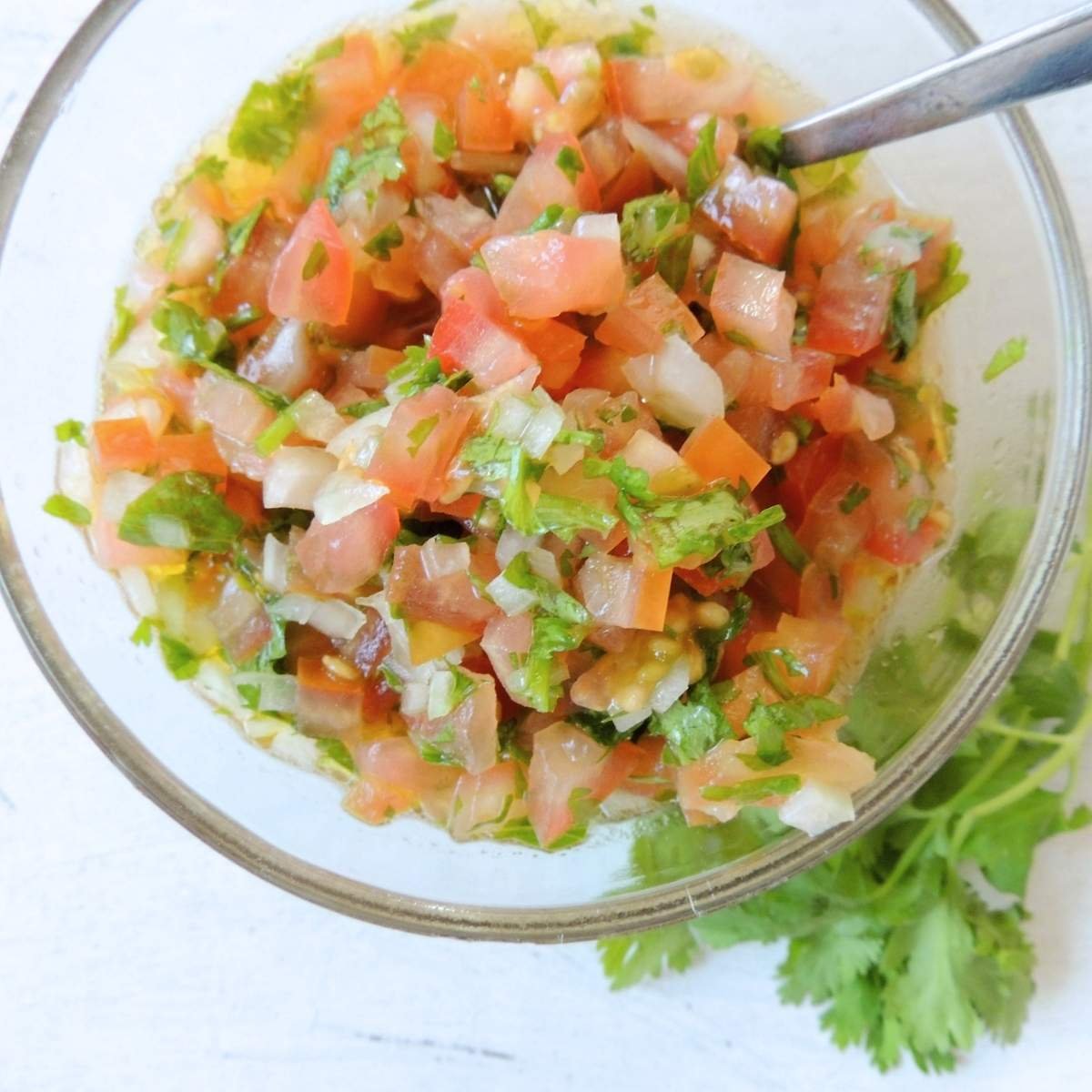
Why You'll Love This Dominican Pico de Gallo with Ají Gustoso Recipe
Ají gustoso is the Dominican flavor secret that most people outside the island do not know exists - the habanero shape and aroma with zero heat, adding the fruity floral note of the pepper family without burning anyone at the table - The option to add ají tití for heat gives you complete control - make it mild with just ají gustoso, or add a quarter of an ají tití for a heat level that builds slowly and is authentically Dominican - Naranja agria as the primary acid gives the salsa a bitter-sweet complexity that lime alone cannot produce - the flavor is more layered and more Caribbean - No cooking, no equipment beyond a knife and a bowl - this is the recipe that is always ready when everything else needs 20 more minutes - Makes 1.5 cups from one batch - enough for 4-6 servings as a condiment, or the full batch as a topping for the Dominican fish ceviche.
Why Dominican Pico de Gallo Works Nutritionally Fresh tomatoes are one of the most nutritionally efficient vegetables per calorie. The USDA FoodData Central confirms that one cup of fresh tomato provides lycopene, vitamin C, potassium, and folate at approximately 30 calories. Harvard Health Publishing confirms that tomatoes deliver maximum vitamin C in their fresh form - making this salsa one of the most efficient vitamin C delivery vehicles in Dominican cooking.
Ají gustoso belongs to the Capsicum chinense species - the same family as habanero peppers. Without capsaicin, it provides all the aromatic compounds and antioxidant flavonoids of the pepper family. The National Institutes of Health confirms that pepper flavonoids have antioxidant and potential anti-inflammatory properties regardless of heat level. You get the benefit without the burn.
If you add ají tití for heat, the capsaicin it provides has been studied by the Cleveland Clinic for its potential anti-inflammatory and metabolic effects. A quarter of one small ají tití per batch delivers those benefits at a manageable heat level. Cilantro provides vitamins A, K, and C. Naranja agria provides hesperidin and vitamin C. At approximately 20 calories per quarter cup serving, this pico de gallo adds vitamins, antioxidants, and flavor to any protein with no meaningful caloric impact. It is the definition of a functional condiment.
Dominican Pico de Gallo with Ají Gustoso (Caribbean Fresh Salsa, 5 Minutes)
Ingredients
- 4 ripe plum tomatoes or 2 large beefsteak tomatoes diced small
- ½ small red onion diced very fine
- 1 ají gustoso seeded and minced fine (mild - no heat)
- Optional heat: ¼ ají titÍ minced extremely fine very spicy - use sparingly
- ½ cup cup fresh cilantro finely chopped
- 2 tablespoon naranja agria sour orange juice
- 1 tablespoon fresh lime juice
- ½ teaspoon sea salt
- 1 tablespoon olive oil for richness
Instructions
- Prep all vegetables: dice tomatoes small and uniform (approximately ¼-inch cubes). Dice red onion even smaller. Seed and mince the ají gustoso as fine as possible to distribute its aroma throughout. If using ají titÍ, mince it extremely fine and use minimally - wash your hands thoroughly after handling and do not touch your eyes.
- Combine: mix tomatoes, red onion, ají gustoso, and cilantro in a glass or ceramic bowl. Never metal - it reacts with the acid and changes the flavor.
- Dress: add naranja agria, lime juice, and salt. Stir gently without crushing the tomatoes.
- Rest: let sit at room temperature for 10 minutes before serving. The salt draws moisture from the tomatoes and the acid marinates the onion slightly, reducing its sharpness.
- Taste and adjust: add more salt, more naranja agria, or a little ají titÍ for heat as desired.
Notes
Nutrition
Nutritionist Note
As an AFPA Certified Holistic Nutritionist, fresh salsa is the condiment I recommend above all others for women over 45 who are managing caloric intake without sacrificing flavor. At approximately 20 calories per quarter cup, this Dominican pico de gallo with ají gustoso adds brightness, acidity, vitamins, and aroma to any protein without meaningful caloric contribution. It is the tool that makes plain grilled chicken or plain fish feel like a meal rather than a task. Ají gustoso is one of the most underused Dominican ingredients in the wellness food space. It delivers the full aromatic profile of the Capsicum chinense pepper family - the fruity, floral note that makes Caribbean cooking immediately recognizable - without any capsaicin. This means women who are sensitive to spicy food, managing reflux, or in bariatric recovery phases can use it freely without concern.
For ají tití - the spicy option - the capsaicin provides anti-inflammatory benefits but must be used minimally. A quarter of one small pepper per batch is enough for significant heat. Women with acid reflux or digestive sensitivity should stick to ají gustoso only. Make this. Put it on everything. For bariatric patients in any post-surgical phase, Dominican pico de gallo with ají gustoso is appropriate as a condiment. The soft diced tomatoes and fine-cut vegetables are easy to eat. The ají tití should be omitted for patients with reflux or digestive sensitivity.
Smart Swaps
No ají gustoso: replace with ají dulce (the Puerto Rican sweet pepper available at most Latin grocery stores). Similar mild, aromatic flavor from the same pepper family. Or use a tiny amount of diced orange bell pepper for the color and mild sweetness, though the aroma is
different.
Want heat: add ¼ of one ají titÍ minced extremely fine. Ají tití is a small, thin Dominican pepper similar to a Thai bird chili - intensely hot, use sparingly. Wash your hands after handling. The heat builds gradually and is genuinely spicy.
No naranja agria: use 2 tablespoons of lime juice plus a pinch of orange zest to approximate the bitter-sweet profile.
Mango pico: add ½ cup of diced ripe mango to the base. Reduces perceived heat from the ají tití if using, adds sweetness, and produces the Dominican mango salsa that goes on the shrimp tacos.
Roasted version: char the tomatoes and onion directly over a gas flame until blackened in spots, then dice. Smokier, richer, it works perfectly on grilled proteins.
FAQ
What is ají gustoso? Ají gustoso is a small Dominican pepper that looks exactly like a miniature habanero - rounded, slightly wrinkled, intensely aromatic - but contains no capsaicin and produces no heat whatsoever.
It belongs to the Capsicum chinense family and delivers all the fruity, floral aromatics of that pepper family without burning. It is used throughout Dominican cooking, wherever you want the perfume of the habanero without the fire. Available at Dominican and Caribbean grocery stores.
What is ají tití? Ají tití is a small, thin Dominican pepper similar to a Thai bird chili - intensely hot and used sparingly for heat. It is one of the hottest peppers in Dominican cooking. A quarter of one ají tití finely minced per batch produces significant heat that builds gradually. It is the correct Dominican choice when you want heat in this pico de gallo. Handle with care - wash hands thoroughly after and avoid touching your eyes.
What is the difference between Dominican pico de gallo and Mexican pico de gallo? Same base structure - fresh tomato, onion, pepper, cilantro, acid, salt. The Dominican version uses ají gustoso (mild aromatic pepper) as the base pepper and naranja agria as the primary acid instead of lime. The resulting flavor is more floral, more bitter-sweet, and more Caribbean than the sharp, grassy-heat profile of the Mexican version.
How long does it keep? Up to 2 days refrigerated. Drain accumulated liquid before serving the second day. Make small batches frequently for the best flavor and texture.
Try these next:
- Low-Carb Dominican Pastelón - Easy Cauliflower Casserole with 29g Protein
- Pollo Asado Dominicano with Avocado Salsa
- Delicious Low-carb chicken nuggets
- Hard-Boiled Eggs Guisados en Escabeche
Con Fuerza y Sazón,
Gaila
AFPA Certified Nutritionist, Dominican Cook, Bariatric Patient
Did you make this recipe? I want to see your plate! Tag @strengthandsazon and use #StrengthAndSazon so I can share your creation with our whole community 🇩🇴
If you love this kind of cooking, the 5 High-Protein Dominican Bowls guide takes the same approach to five classic dishes.
Let's stay connected: