
It’s the dish that shows up at the moments that matter: births, losses, the gatherings you remember. In my family, sancocho belonged to my two grandmothers, Beba and Marina. Both of them made it, each in her own way. But the one who taught me was Mami.
Her secret started in a separate pot. She would boil auyama with onion, ají, garlic, oregano, cilantro, and culantro until everything was tender, then blend it into a thick, golden cream. In the big sancocho pot, she browned the meats first, poured that cream over them, and once it came to a boil, added the víveres and more auyama so it would melt right into the broth. That cream is why her sancocho tasted like nobody else’s.
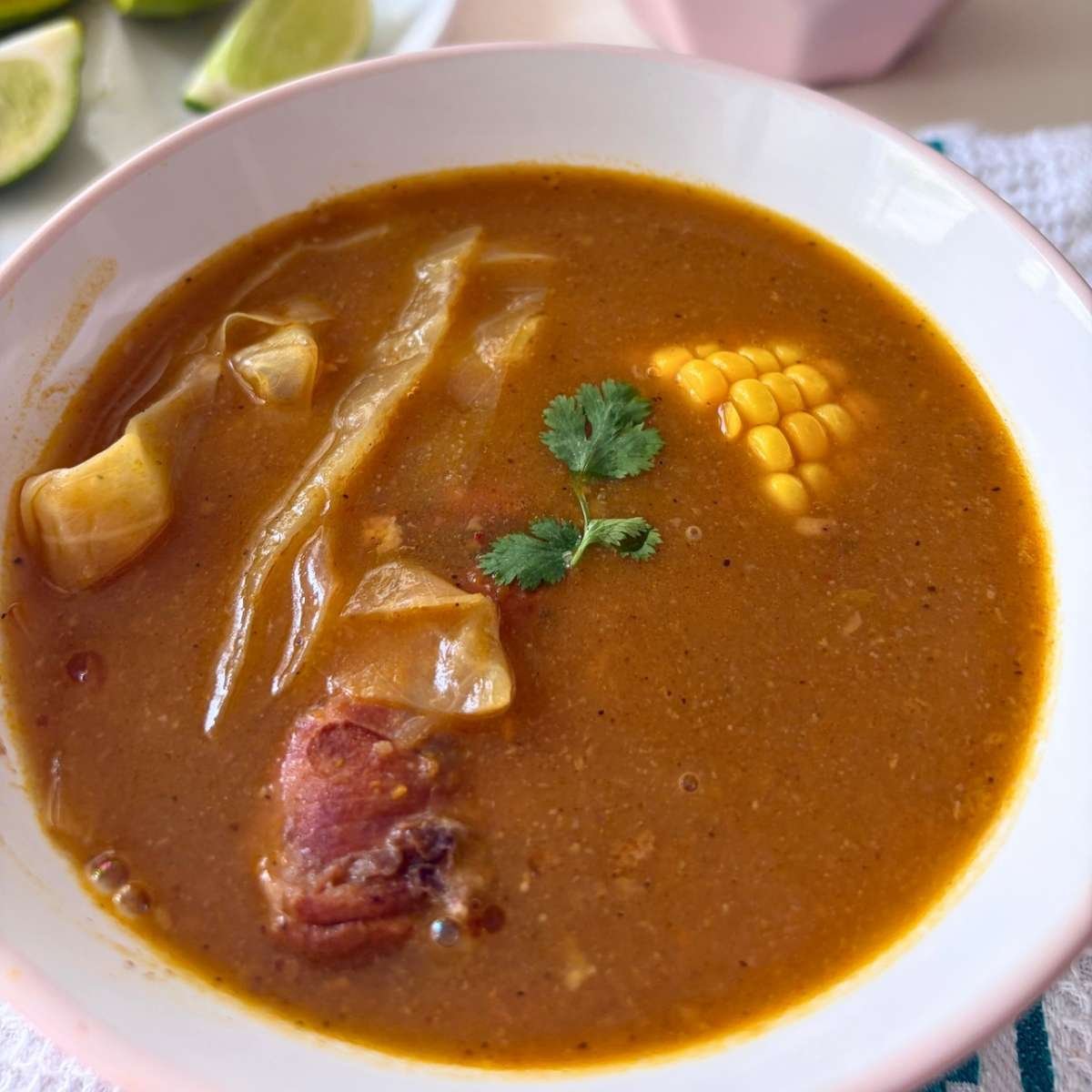
I made it exactly her way for years, and that cream I will never change. What I changed is everything around it: leaner cuts, bone broth instead of just water, and a smarter way to serve the bowl. The result is 31 grams of protein per serving, without losing a single gram of Mami’s sazón.
This is my sancocho. The same one I’ve always known, built for the stage of life we’re in now.
Gaila | AFPA Certified Holistic Nutritionist | Dominican Cook
Nutritionist Note
As an AFPA Certified Holistic Nutritionist, sancocho is one of the dishes I get asked about most by women navigating midlife and bariatric maintenance. My answer is always the same: sancocho is not the problem. It never was. The traditional version already has exceptional bones, nutritionally and literally.
Multiple proteins, root vegetables with natural fiber, and a long-simmered broth. Bone broth and bone-in cuts simmered for a long time release collagen into the liquid, and collagen-rich broths have long been valued for joints and gut comfort, both of which become a bigger conversation after 45. This version delivers 31g of protein per serving across three lean meats.
Research published by the National Institutes of Health points to 1.0 to 1.2g of protein per kilogram of body weight for women over 50 who want to preserve muscle. One bowl of this sancocho gets you a big step closer in a single meal.
The root vegetables (yuca, auyama, and plátano) provide complex carbohydrates and fiber, and cooled yuca and plátano also offer resistant starch that feeds beneficial gut bacteria. Paired with protein, they give you steadier energy than a carb-heavy bowl on its own.
For bariatric patients in the general diet and maintenance phases, sancocho is one of the most complete meals in Dominican cooking: soft proteins, soft vegetables, and a bone broth base.
The American Society for Metabolic and Bariatric Surgery recommends 60 to 80g of protein per day in maintenance. One generous bowl of this sancocho covers more than a third of that target. Eat the broth. All of it.
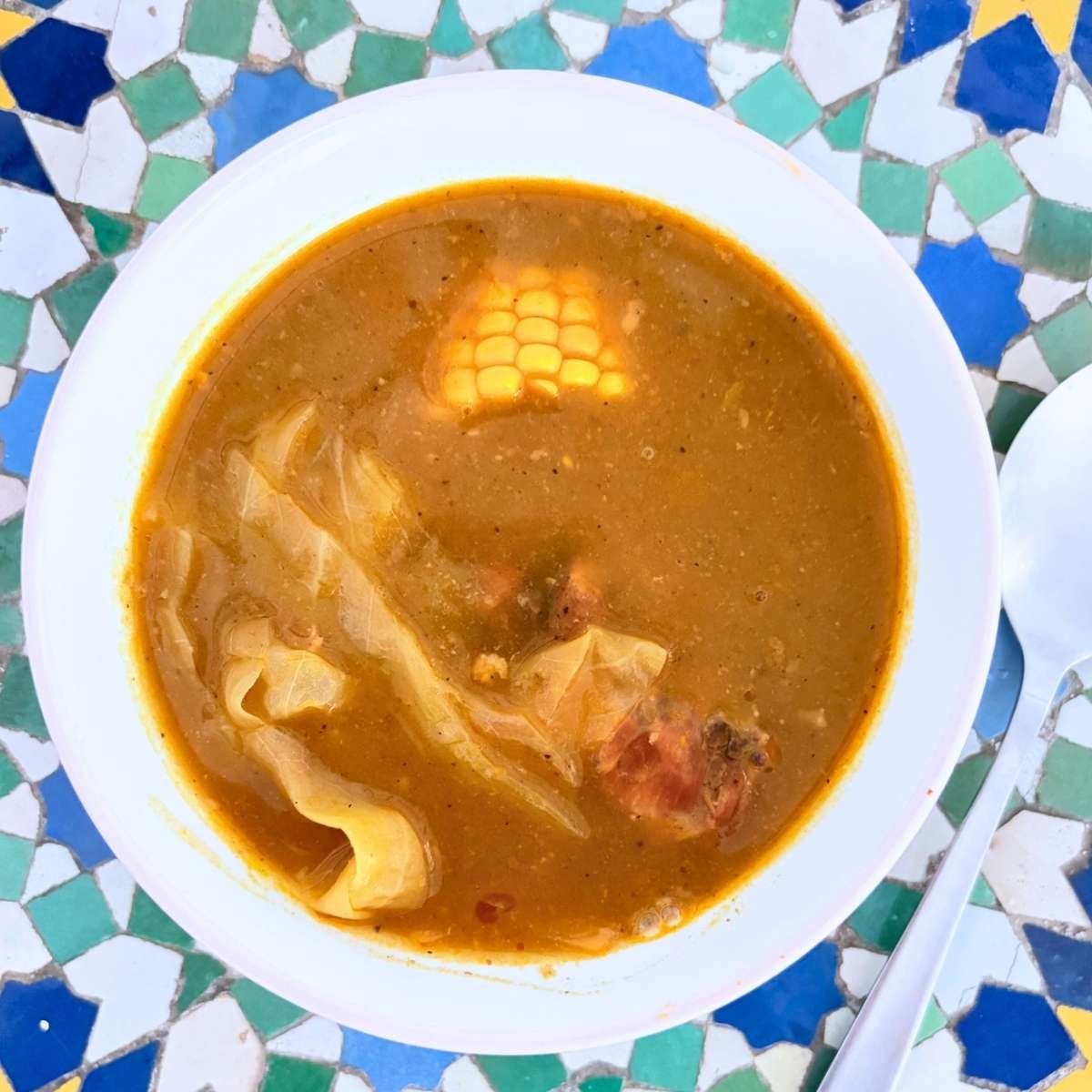
Table of Contents
Why Protein Matters in Your Sancocho After 45
After 45, your body processes protein differently. Research from the National Institutes of Health suggests that women over 50 need 1.0 to 1.2g of protein per kilogram of body weight to preserve muscle mass and bone density, significantly more than the standard 0.8g recommendation.
Muscle loss accelerates quietly. Not dramatically, just steadily. The way to fight it is consistent protein at every meal, including the traditional ones.
The classic sancocho already has great bones, literally. Multiple meats, root vegetables with natural fiber, and a long-simmered broth. What this version adds is intention: leaner cuts that keep fat in check, bone broth that gives the caldo more body and protein, and a balance of meats that hits 31g of protein per bowl.
Steady energy and consistent protein are two of the most important things to protect as your body changes through perimenopause and beyond. This Dominican sancocho recipe gives you both in one pot.
You don’t have to choose between your culture and your health. You just have to build the plate smarter.
Ingredients:
The Meats (lean, high-protein)
- 1 lb skinless chicken breast or thighs, cut into pieces
- 1 lb lean pork loin, cut into pieces
- ½ lb lean beef top round or sirloin, cut into pieces
- 2 cups low-sodium bone broth, plus extra water to cover
The Root Vegetables (Víveres)
- 2 cups auyama (Caribbean pumpkin), cubed
- ½ lb cassava (yuca), peeled and cut into pieces
- 1 to 2 green plantains, peeled and sliced
The Sofrito and Seasoning
- 4 garlic cloves, mashed
- 1 medium red onion, chopped
- 1 green bell pepper, chopped
- 1 generous bunch of fresh cilantro
- ½ bunch of culantro (recao), if available
- 1 teaspoon Dominican oregano
- Bitter orange or lime juice, to taste
- Salt and pepper, to taste
- 1 tablespoon avocado oil
Ingredients
The Meats (lean, high-protein)
- 1 lb skinless chicken breast or thighs cut into pieces
- 1 lb lean pork loin cut into pieces
- ½ lb lean beef top round or sirloin cut into pieces
- 2 cups low-sodium bone broth plus extra water to cover
The Root Vegetables (Víveres)
- 2 cups auyama Caribbean pumpkin, cubed
- ½ lb cassava yuca, peeled and cut into pieces
- 1 to 2 green plantains peeled and sliced
The Sofrito and Seasoning
- 4 garlic cloves mashed
- 1 medium red onion chopped
- 1 green bell pepper chopped
- 1 generous bunch of fresh cilantro
- ½ bunch of culantro recao, if available
- 1 teaspoon Dominican oregano
- Bitter orange or lime juice to taste
- Salt and pepper to taste
- 1 tablespoon avocado oil
Instructions
- Step 1: Season the meats. Season the chicken, pork, and beef with garlic, oregano, sour orange juice, salt, and pepper. Let it sit at least 15 minutes, or overnight in the fridge if you have time. The longer, the better.
- Step 2: Brown the meats. In a large heavy pot, heat the avocado oil over medium-high heat. Brown the meats in batches. Don't crowd the pot. You want color on the outside, not steam. This step builds the flavor base of the whole stew.
- Step 3: Make Mami's auyama cream. While the meats are browning, place 1 cup of auyama, the onion, green pepper (ají), 2 garlic cloves, half the oregano, the cilantro, and the culantro in a separate pot. Cover with about 2 cups of water or bone broth and boil for 15 to 20 minutes, until the auyama is completely tender. Blend until smooth and golden. This cream is the base of the whole sancocho.
- Step 4: Add the cream, broth, and meats. Return all the browned meats to the big pot and pour Mami's cream over them. Add the bone broth and enough water to cover everything by about 2 inches. Bring to a boil.
- Step 5: Add the víveres. Once it boils, add the yuca, plantain, and the remaining cup of auyama. Reduce to a steady simmer. That second round of auyama will slowly melt into the broth, so with the cream underneath, you get the thick, golden caldo without any extra work.
- Step 6: Simmer low and slow. Cook uncovered on low to medium heat for 60 to 75 minutes, stirring occasionally. Skim off any fat that rises to the top. The broth is ready when it coats the back of a spoon and the meats fall apart easily.
- Step 7: Taste and finish. Adjust the salt. Add a squeeze of fresh lime or sour orange directly into the pot right before serving. This wakes up every flavor in the broth.
- Step 8: Serve. Ladle into deep bowls, meat and broth first. Serve with a measured portion of white rice on the side, ripe avocado, and an extra squeeze of lime.
- Recipe card notes: For a thicker broth, let the auyama cook until it fully dissolves into the caldo. It does all the work on its own. If you prefer more broth, add ½ cup of water at a time during the last 20 minutes.
Nutrition
Smart Swaps
Lower sodium: Use low-sodium bone broth, homemade sofrito with no added salt, and season with salt only at the end, after tasting. The Cleveland Clinic recommends staying under 2,300mg of sodium per day.
Bariatric soft food and general diet phases: All three meats become very tender after 90 minutes of simmering. Shred the chicken and cut the pork and beef into small pieces before serving. Serve the broth and soft proteins in a small bowl, about 1 cup total volume per meal.
Lower carb: Use one plátano instead of two and keep the yuca and auyama. The auyama still dissolves into the broth, so you keep the thick, golden caldo with fewer carbs.
Pork-free: Replace the pork loin with an extra ½ lb of lean beef and ½ lb of chicken thighs. The bone broth keeps the depth in the caldo.
Faster weeknight version: Use a pressure cooker or Instant Pot. Brown the meats using the sauté function, build the sofrito base, add all ingredients, and cook on high pressure for 35 minutes. Natural release for 15 minutes. You lose a little of the slow-simmered depth, but the flavor is still authentically Dominican.
Higher protein: Add one cup of cooked white beans or chickpeas in the last 15 minutes. They absorb the broth flavor completely and add about 15g of plant protein per batch.
What Is Dominican Sancocho?
Dominican sancocho is the national dish of the Dominican Republic, a hearty, slow-simmered stew made with multiple meats, root vegetables, and fresh herbs. The word comes from the Spanish verb sancochar, meaning “to parboil.” It is considered the ultimate comfort food of Dominican culture, traditionally made for family gatherings, celebrations, and special occasions.
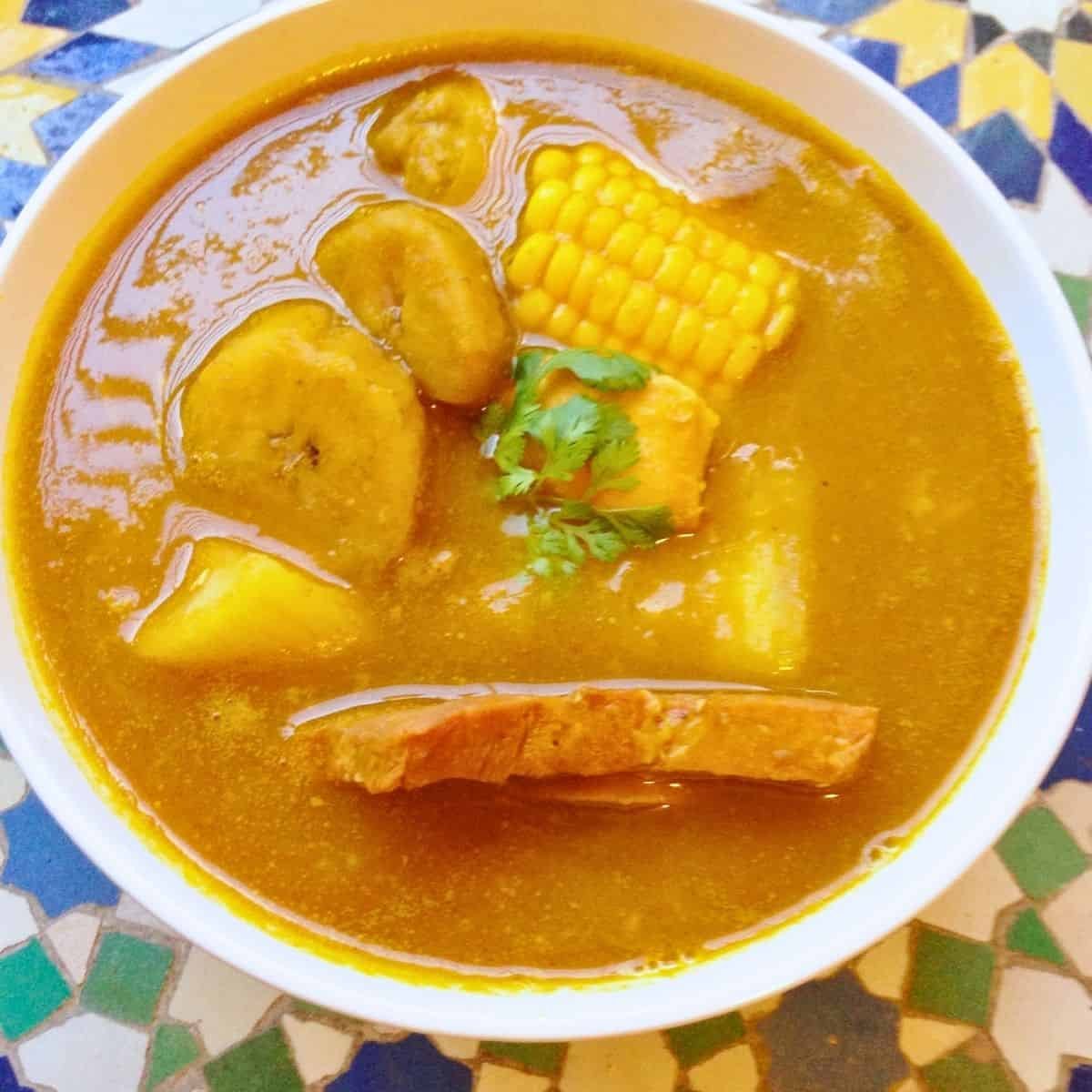
The classic version, sancocho de siete carnes, uses seven different meats: chicken, beef, pork, goat, longaniza, smoked sausage, and salted meat. Everyday versions use two or three meats. The vegetables always include yuca, plátano, and auyama, which break down in the broth and create its characteristic thick, golden caldo.
It is always served with white rice on the side, ripe avocado, and a squeeze of fresh lime into the broth.
Notes
Alternative meats: Feel free to adjust the combination of meats based on availability and personal preference, similar to what I use in my Dominican Pork Locrio.
Consistency: Sancocho can be as thick or as brothy as you like. Adjust the simmering time accordingly.
Tips and Tricks
Sour orange juice: If you can’t find sour orange juice, a mix of regular orange juice and lime juice works as a substitute.
Storage: Sancocho tastes even better the next day. Store it in an airtight container in the fridge for up to 3 days.
Frequently Asked Questions About Dominican Sancocho
What is the difference between sancocho and soup?
Sancocho is much heartier and thicker than a traditional soup. It uses root vegetables like yuca, plantain, and auyama that break down and naturally thicken the broth, the same technique I use in my High-Protein Dominican Bowls. It is a complete meal on its own, not a starter, and it typically contains more than one type of meat.
How many meats go in Dominican sancocho?
The most celebrated version is sancocho de siete carnes, with seven meats: chicken, beef, pork, goat, longaniza, smoked sausage, and salted meat. For everyday cooking, three lean meats (chicken, beef, and pork) give you all the flavor with a better nutritional profile and 31g of protein per serving.
Can you make sancocho without ñame?
Yes. Ñame is traditional, but the stew works beautifully with just yuca, auyama, and plátano. These three alone create the authentic thickness and flavor of the broth.
Is Dominican sancocho healthy?
Made with lean meats and bone broth, sancocho is naturally high in protein and gets good fiber from the root vegetables. This version delivers 31g of protein per serving. The key is using lean cuts and skimming the excess fat from the broth while it cooks.
What do you serve with Dominican sancocho?
White rice on the side, ripe avocado, and a squeeze of fresh lime directly into the bowl. In the Dominican Republic, it is also served with crusty bread for soaking up the broth.
Can you freeze Dominican sancocho?
Yes. Sancocho freezes very well for up to 3 months. Store the broth and solids together. The root vegetables soften further after freezing, which makes the broth even thicker when reheated.
What makes Dominican sancocho different from other versions?
Dominican sancocho uses a wider variety of meats than most other Latin versions, and the broth gets its color and depth from auyama and a sofrito base with Dominican oregano. Puerto Rican sancocho typically uses fewer meats, and Colombian versions often use only chicken. The Dominican version is the most complex and celebratory of all the Caribbean sancochos.
If you are cooking protein-forward after 45, check out my other high-protein recipes and meal ideas on the blog.
More Dominican Recipes Built for Strength
If this sancocho is your kind of cooking (the real flavors, built smarter), here is what to try next:
- 5 High-Protein Dominican Bowls: La Bandera, Yaroa, Mangú, and more, all rebuilt with 32 to 47g of protein
- Locrio de Pollo y Chuletas: Authentic Dominican One-Pot Rice with 34g Protein
- Dominican Pork Locrio: the weeknight version of this same spirit
- Low-Carb Dominican Pastelón: Easy Cauliflower Casserole with 29g Protein
- Pollo Asado Dominicano with Avocado Salsa
Want all 28 high-protein Dominican recipes in one place? The Dominican High-Protein Recipe Guide has everything. Grab it at stan.store/strengthandsazon.
A buen tiempo.
Con Fuerza y Sazón,
Gaila
AFPA Certified Nutritionist, Dominican Cook, Bariatric Patient
If you made this sancocho, give it 5 stars in the recipe card above. It helps more than you think, and I love knowing the caldero is going in your kitchen.
Did you make this recipe? I want to see your plate! Tag @strengthandsazon and use #StrengthAndSazon so I can share your creation with our whole community 🇩🇴
If you love this kind of cooking, the 5 High-Protein Dominican Bowls guide takes the same approach to five classic dishes.
Let’s stay connected: